torstai 23. kesäkuuta 2022

Kaikki tai ei mitään * All or nothing


Miten ollakaan, eteeni sattui useampia sivustoja, joissa kerrotaan, että sana Adonai on itseasiassa monikkomuoto (my Lords). Sellainen ei ole tullut mieleeni, vaikka olen kyllä ihmetellyt kyseistä sanaa ja sen muotoa. Sanan yksikkö on אדון adon (herra). Taivutusmuoto ’adoni' merkitsee 'minun herrani’. Tätä muotoa, Adoni, foinikealaiset käyttivät Tammuksesta, ja se vastaa myös kreikkalaisten ’Adonista’. 

I happened to open several sites that say the word Adonai is actually a plural form (my Lords). Such has not come to my mind, although I have wondered about that word and its form. The singular form of the word is אדון adon (lord). The form ’adoni’ means ‘my lord’. This form, Adoni, was used by the Phoenicians from Tammuz, and is also responsible for the Greek ‘Adon’.

Samoilla sivustoilla kerrotaan myös, että monikollinen Adonai samoin kuin myös muut monikossa kirjoitetut  Jumalan nimet ilmaisevat, että kyseinen nimi pitää sisällään kaikki jumaluudet, joita Israel ja heidän naapurikansansa ovat palvoneet. Siis varsinaista pakanuutta!

The same sites also report that the plural form ’Adonai' as well as other names of God written in the plural indicate that the name in question includes all the deities worshiped by Israel and their neighbours. So the real paganism!

Koska myös tetragrammiin (jonka kohdalla lausutaan ’Adonai’) on lisätty ns. Shemhamephorashissa eli Laajennetussa 72 nimeä, on pakko pysähtyä miettimään, mitä voimia sanalla ’Adonai’ oikein kutsutaankaan. Tässä yhteydessä lienee syytä muistuttaa, että myös Goetia-demoneja sattuu olemaan 72 kappaletta. 

Since to the Tetragrammaton (pronounced ’Adonai’) has been added so-called Shemhamephorash, or the Expanded Name of God including 72 Names, I'm forced to stop to think about what forces are actually called by the word ‘Adonai’. In this context, it should be recalled that there are also 72 Goetia demons.

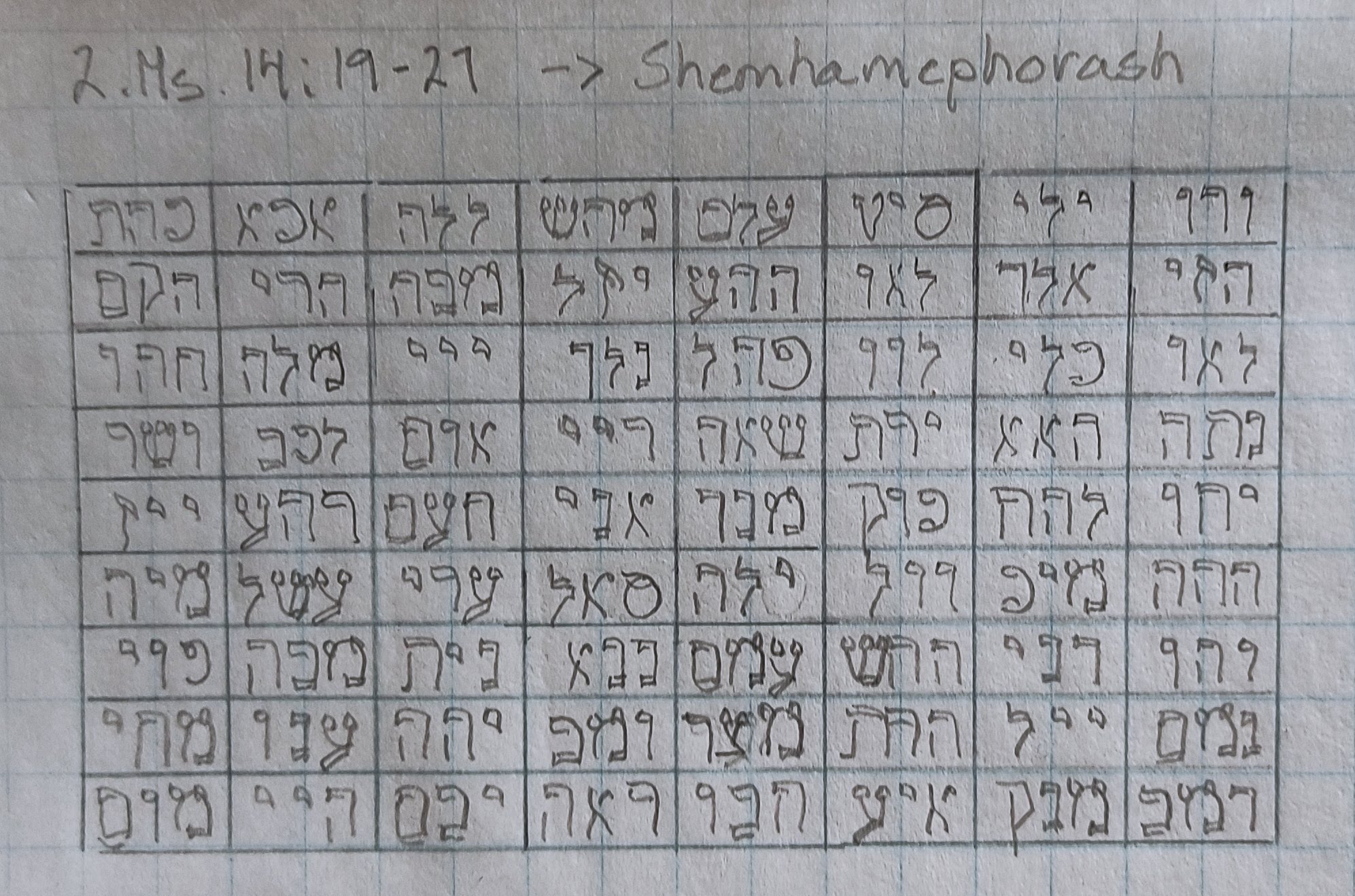
Tosin Shemhamephorashin nimet on muodostettu Raamatun tekstin pohjalta järjestelemällä jakeiden 2. 14: 19 - 21 kirjaimet tietyllä systeemillä uudelleen. Mutta miksi Raamatun tekstin kirjaimia pitää sekoittaa uuteen järjestykseen ja luoda Jumalalle lisänimiä, joiden merkitys on täysin tuntematon? Moniko noista alla olevan taulukon sisältämistä 72 nimestä näyttää tutulta ja turvalliselta?

Admittedly, the names of Shemhamephorash are formed from the text of the Bible by rearranging the letters of verses 2: 14: 19-21 in a particular system. But why should the letters of the Bible text be confused with the new order and create additional names for God; names meaning completely unknown things? How many of the 72 names in the table below look familiar and safe?


Enpä taida tästä lähtien käyttää edes nimeä Adonai!

I don't even think of using the name Adonai from now!

Franz Delitzsch käyttää Uuden Testamentin käännöksessään Jeesuasta muotoja adon (herra), adoni (herrani), adoneinu (herramme) ja adonei ha-adonim (herrojen herra).

Franz Delitzsch uses about Jeshua the forms adon (lord), adoni (my lord), adoneinu (our lord) and adonei ha-adonim (lord of lords) in his translation of the New Testament.
 
Olen kirjoittanut jo moneen kertaan Shem-ha-Mephorashista ja siihen liittyvästä magiasta. Sen 72 nimeä tulevat vastaan aina uudella tavalla järjestettyinä.

I have already written many times about Shem-ha-Mephorash and the magic associated with it. Its 72 names are always in a new order .

Minulle riittää yksi elävä Jumala, Ehjee!

One living God, Ehyeh, is enough for me!

lauantai 18. kesäkuuta 2022

Herroittelua * Domination

Viime päivinä olen ajatellut, että alan vähitellen lopettaa blogi-kirjoittamisen, olenhan tehnyt sitä jo vuodesta 2008 alkaen. Eräät henkilöt ovat toivoneet, että julkaisisin aiheesta kirjan. Tekstiä on kertynyt vuosien mittaan kuitenkin niin paljon, että sen järjesteleminen ja kokoaminen kirjaksi vaatisi paljon aikaa. Ja sitä minulla ei nyt tällä hetkellä ole riittävästi. 

In the last few days, I’ve been thinking about starting to gradually stop blogging, since I’ve been writing since 2008. Some people have hoped a book on this subject. However, the text has accumulated so much over the years that it would take a long time to organize and compile it into a book. And I don’t have enough of that right now.

Lähtölaukauksen blogi-kirjoittamiselle antoi se väistämätön ristiriita, joka syntyi, kun tajusin, että tetragrammi tunnetaan okkultismissa paremmin kuin kristillisyydessä. Minun oli täysin mahdotonta ymmärtää, että sama jumaluus, joka palvelee okkultismin puolella nimensä huutajia antamalla heille saatanallisten demonien ilmestymisen kautta salaista tietoa, viisautta, neuvoa, rikkautta, valtaa, kunniaa jne., ohjaisi toisaalla vilpittömät totuuden etsijät Elämän Vetten Lähteille, ainoan todellisen Jumalan ja Pelastajan luo. Tätä ristiriitaa en ymmärrä vieläkään.

The starting point for blog writing was the inevitable contradiction that arose when I realised that the Tetragrammaton is better known in occultism than in Christianity. It was utterly impossible for me to understand that the same deity who serves the callers of his name on the occult side by giving them secret knowledge, wisdom, advice, wealth, power, glory, etc., through the appearance of satanic demons, would guide sincere seekers of truth elsewhere to the Water Sources of Life and the only true God and the Saviour. I still do not understand this contradiction.

Pohtiessani tätä jo noin 14 vuotta olen yrittänyt kaivaa esiin kaiken mahdollisen, mikä koskee Jumalasta Raamatussa käytettyjä nimiä. Jokainen yritys on tuonut vain lisää sameaa vettä tetragrammi-lippooni. Mutta näiden vuosien aikana olen ymmärtänyt myös, että pohja tämän aihepiirin selvittämiseen oli annettu kohdallani jo paljon aikaisemmin, tosin tarkkaa vuotta en jaksa muistaa.

In pondering this for about 14 years, I have been trying to dig out everything possible about the names of God used in the Bible. Each succes has just brought more muddy water to my Tetragrammaton cup. But during these years, I have also realised that the basis for clarifying this topic had already been laid for me much earlier, although I cannot remember the exact year.

Olin vasta koululainen, kun luin Raamattua, ja tullessani 2. Moos. 3: 14:een, joku yliluonnollinen voima pakotti minut lukemaan kyseistä jaetta uudelleen ja uudelleen (”Sano israelilaisille näin: ’Minä olen’ lähetti minut teidän luoksenne”) ja vertaamaan sitä sivun marginaalissa olevaan huomautukseen, jossa kerrotaan, että ’Minä olen’ on hepreaksi ehjee; joka muistuttaa Herran nimeä Jahve. Että mitä?! Vertaa vastaava arkipäivän tilanne: Sano lapsille: Helinä tulee hakemaan teidät... reunahuomautus: Helinä muistuttaa nimeä Helena... kumpi siis tulee hakemaan lapset, Helinä vai Helena? 

I was only a schoolgirl when I read the Bible, and when I came to Exodus 3:14, a supernatural power forced  me to read that verse over and over again (“Say unto the children of Israel,‘ I am ’sent me to you”) and compare it a note in the margin of the page stating that ‘I am’ is in Hebrew eheyh; which resemblesYahweh, the name of the Lord. What?! Compare the corresponding everyday situation: Say to the children: Helinä will pick you up ... side note: Helinä is reminiscent of Helena ... so which will pick up the kids, Helinä or Helena?

Mutta asia ja sen aiheuttama hämmennys unohtuivat jossakin vaiheessa, ja vuodet kuluivat. Murrosikäisenä koin voimakasta Jumalan puhuttelua, ja tunsin tarvetta löytää henkilökohtaisen suhteen Jumalaan ja ennen kaikkea Jeeshuaan, jonka merkitys omalla kohdallani oli vielä epäselvä. Pahaksi (tai hyväksi) onneksi tulin osallistuneeksi juuri tuossa vaiheessa ns. karismaattisiin kokouksiin, joiden vaikutus elämääni oli traumaattinen, etten sanoisi katastrofaalinen. Kokouksissa korostettiin yli kaiken Pyhää Henkeä, joka nostettiin jumaluuden tärkeimmäksi persoonaksi. 

But the thing and the confusion it caused were forgotten at some point, and years passed. As a teenager, I experienced a strong talk from God, and I felt the need to find a personal relationship with God and, most importantly, Jeshua, whose meaning to me was still unclear. Fortunately (or for good) I became involved just at that point in the so-called. to charismatic meetings that had a traumatic impact on my life, not to mention catastrophic. The meetings emphasised above all the Holy Spirit, who was elevated to the foremost personality of divinity.

Jälkeenpäin olen ymmärtänyt, että nämä varhaiset kokemukseni nuoruudessa ovat suurin syy siihen, miksi minun on pitänyt myöhemmin etsiä totuutta Jumalan nimestä.

Afterwards, I have realised that these early experiences of my youth are the biggest reason why I have had to seek the truth of God’s name later.

Karismaattisten kokusten jälkeen en halunnut kuulla sanaakaan ’Pyhästä Hengestä’. Useita vuosia ehti kulua myös niin, etten avannut Raamattuani kertaakaan. Mutta lapsuudessa opittu iltarukous ja tietynlainen jatkuva ajatus-yhteys ylöspäin säilyi kaikkina vuosina, samoin kuin 7-vuotiaana oppimani sapatin pyhittäminen. Lasten syntymä ja vanhempana olemisen vastuu vetivät minut takaisin Isän luo, ja siitä alkoi omatoiminen Raamatun lukeminen ja tutkiminen. 

After the charismatic meetings, I didn’t want to hear a word about the ‘Holy Spirit, Holy Ghost’. It also took several years for me not to open my Bible once. But the evening prayer learned in childhood and a certain constant connection of thought upward was maintained throughout the years, as was the observance of the Sabbath, which I learned at the age of seven. The birth of children and the responsibility of being a parent pulled me back to the Father, and from that began the independent reading and study of the Bible.

Kouluaikana olen osallistunut kreikan-kerhoon, ja jossakin työelämän vaiheessa olen opetellut heprean aakkoset, ja näillä molemmilla vieraan kielen alkeilla on ollut kohdallani suuri merkitys.

During school, I have attended a Greek club, and at some point in my working life, I have learned the Hebrew alphabet, and both of these elements of a foreign language have been of great importance to me.

Jossakin vaiheessa tetragrammia tutkiessani eteeni tuli 2. Moos. 6: 2, 3, jonka mukaan Jumala on ilmestynyt Aabrahamille, Iisakille ja Jaakobille nimellä ’Kaikkivaltias' eikä nimellä ’Herra’ (heprean tekstissä יהוה, Jahve/Jehova). Miksi sitten tetragrammi esiintyy kuitenkin noiden kolmen patriarkan elämästä kertovissa Genesiksen luvuissa? Kuka ne on kirjoittanut ja milloin?

At some point while studying the Tetragrammaton, I came across Exodus 6: 2, 3, according to which God appeared to Abraham, Isaac, and Jacob as “Almighty” and not as “Lord” (Hebrew, Yahweh/Jehovah). But why does the Tetragrammaton appear in the Genesis chapters about the lives of those three patriarchs? Who wrote them and when?

1. Moos. 4: 26, jonka olin noteerannut jo lukiessani Raamattua ensimmäisen kerran, vaati miettimistä moneen kertaan. Kun Jumala on avoimesti esittäytynyt Aabrahamille nimellä ’Kaikkivaltias’ (1. Moos. 17: 1), ja Moosekselle nimellä ’Ehjee’ (2. Moos. 3: 14), niin miksi Hän ei esittäytynyt niille ihmisille, jotka alkoivat huutaa avuksi nimeä ’Herra’ eli 'Jahve/Jehova’?

Genesis 4:26, which I had already noticed when I first time read the Bible, required my thinking thought many times. When God openly introduced himself to Abraham as' Almighty '(Genesis 17: 1), and to Moses as' Ehyeh' (Exodus 3:14), why did He not introduce himself to those who began to call upon the name of the ’ Lord’ or 'Yahweh/Jehovah'?

Koska tuossa jakeessa ei kerrota mitään Jumalan omasta esittäytymisestä, miten nuo ihmiset (todennäköisesti Kainin jälkeläiset) keksivät tuon nimen? He siis alkoivat vain omasta tahdostaan käyttää nimeä יהוה! Olivatpa he keitä hyvänsä, he olivat ihmisiä, jotka alkoivat käyttää tuota nimeä... ilman Jumalan ilmoitusta! Tetragrammi on siis ihmisten antama nimi Jumalalle

Since that verse says nothing about God’s own introduction, how did those people (probably the descendants of Cain) come up with that name? So they only started using the name יהוה of their own free will! Whoever they were, they were people who started using that name ... without God's revelation! The Tetragrammaton is thus the name given by men to God.

Vähän samaan tapaan eräs oppinut vastasi kysymykseeni ’mikä on Jahve’ sanoessaan ’se on akateeminen sopimus Jumalan nimestä’.

In much the same way, a scholar answered my question ‘what is Yahweh’ when he said ‘it is an academic agreement on the name of God’.

On selvää, että Kainin elämä muuttui suuresti hänen murhattua Aabelin. Vanhempien suru oli raskasta katsella, ja ehkä se oli yksi syy, miksi Kainista tuli koditon pakolainen. Noodin maa (1. Moos. 4: 16) tulee verbistä נוד, 'nod, huojua, olla koditon, kuljeskella päämäärättömästi ja vastaavasta' substantiivista ’kodittomuus, pakolaisuus’. 

It is clear that Cain's life changed greatly after he murdered Abel. The grief of the parents was hard to watch, and perhaps that was one reason why Cain became a homeless refugee. The land of the Nod (Gen. 4:16) should be of the verb נוד, ‘nod, sway, be homeless, wander aimlessly', and the corresponding noun ’homelessness, refugee’.

Kain ja Abel olivat varmasti kuulleet vanhemmiltaan Jumalan antamasta lupauksesta Vaimon Siemenestä (Jeeshuasta), joka tulisi voittamaan Kuoleman. Mutta tottelemattomuuteen kiusattuna Kain rakenteli Jumalan lupausten pohjalta omaa uskoaan, mikä näkyi jo hänen viallisessa uhrissaankin. 

Cain and Abel had surely heard from their parents about God’s promise of the Seed of the Woman (Jeshua) who would come to overcome Death. But tempted by disobedience, Cain built his own faith on the basis of God's promises, which was already evident in his faulty sacrifice.

Pakanauskonnoissa on kyllä usko jumalalliseen siemeneen, inkarnaatioon (papitar temppelin huipulla olevan huoneen vuoteella) ja ylösnousemukseen (Isis-Osiri-myytti), mutta niissä opeissa ole ole pelastusta. 

The pagan religions do have faith in the divine seed, the incarnation (a priestess on the bed of the room at the top of the temple) and the resurrection (the Isis-Osiri myth), but there is no salvation in those doctrines.

Juutalaisten lähteiden mukaan tiedetään, että Kain alkoi rakentaa omaa uskontoaan ns. Valitususkontoa äiti-lapsi-myytin ympärille... kenties siinä toivossa, että Abel nousisi kuolleista, ja Eeva saisi lohdutuksen.

According to Jewish sources, it is known that Cain began to build his own religion in the so-called The religion of Lamentation around the mother-child myth...  may be in the hope that Abel would rise from the dead and that Eve would be comforted.

On selvää, että Kainin jälkiläiset seurasivat esi-isäänsä, ja tottelemattomuuden siemen kasvoi siinä sukuhaarassa. Se näkyy hyvin vahvana jo Lemekin perheessä, Kainista kuudennessa polvessa. Pakanuudessa on aina ehditty Jumalan lupausten ja tekojen edelle. Jo paljon ennen heprealaisten Ilmestysmajaa ja sen komeampaa mallia, Temppeliä, pakanoilla oli temppeleitä ja papisto lähes jokaisen vuoren huipulla. On varmaa, että heidän jumalallaan oli myös nimi.  Ja aivan yhtä varmaa on se, että heillä oli myös pyhät kirjoitukset. Sekoittuivatko pyhät nimet ja tekstit jossakin vaiheessa toisiinsa? Tapahtuuhan sellaista vielä nykyäänkin! Ei ole vallan harvinaista, että kristinuskon puolella toimivat papit lukevat okkultistisia teoksia, ja tuovat sieltä oppimaansa tietoa omiin saarnoihinsa ja kirjoituksiinsa. Mystiikka muodostaa sopivan linkin okkultismin, juutalaisuuden ja kristillisyyden välillä!

It is clear that the descendants of Cain followed their ancestors, and the seed of disobedience grew in that branch. It was already very strong in Lemek's family, in the sixth generation of Cain. Paganism has always been ahead of God’s promises and deeds. Long before the Hebrews had their Tabernacle and its more handsome model, the Temple, the Gentiles had temples and a clergy at the top of almost every mountain. It is certain that their god also had a name. And it is just as certain that they also had the sacred scriptures. Were the sacred names and texts confused at some point? That's what's happening even today! It is not uncommon for priests on the Christian side to read occult works and bring the knowledge they learn from them into their own sermons and writings. Mysticism forms a suitable link between occultism, Judaism and Christianity!

Kirjoitettua sanaa on helppo muuttaa, ja Raamatun kohdalla muutoksia on voitu tehdä pitkän ajan kuluessa! Raamatun teksteihin tehdyt muutokset, lisäykset ja poistot ovat niin yleisiä, että minun luottamukseni Raamatuun Jumalan puhtaana ja muuttumattomana sanana on horjunut suuresti siitä, mitä se oli nuoruusvuosinani. Mutta samalla olen huomannut, että Jumala on kyennyt lujittamaan totuuden tavoilla, joita Hänen Vastustajansa, Perkele, ei ole kyennyt murtamaan. Esim. 2. Moos. 3: 14:ssa Jumalan sanat: אהיה אשר אהיה ehjee asher ehjee, on Jumalan murtamaton sinetti. Kysymyksiin on vain perehdyttävä entistä syvemmin Jumalan hengen ohjauksessa.

The written word is easy to change, and changes to the Bible have been possible over a long period of time! Modifications, additions, and deletions to biblical texts are so common that my confidence in the Bible as the pure and unchanging word of God has been greatly shaken from what it was in my youth. But at the same time, I have found that God has been able to strengthen the truth in ways that His Opponent, the Devil, has not been able to break. For example, in Exodus 3:14 the words of God; אהיה אשר אהיה ehyeh asher ehyeh, are the unbreakable seal of God. The questions just need to be explored more deeply under the guidance of the Spirit of God.

Sana יהוה, ’Herra’ Jahve, Jehova' esiintyy aivan ensimmäisen kerran toisessa (2.) luomiskertomuksessa (1. Moos. 2: 4: 25). Mutta miksi tarvitaan kaksi luomiskertomusta varsinkin, kun ensimmäinen luomiskertomus (1. Moos. 1: 1 - 2: 3, huomaa 7. päivän merkillinen sijoittaminen 2. luvun alkuun!) on täydellinen?

The word יהוה, 'Lord, Yahweh, Jehovah' appears for the very first time in the second (2nd) narrative of creation (Gen. 2: 4:25). But why are two creation narratives needed, especially when the first creation story (Gen. 1: 1 - 2: 3, note the remarkable placement of the 7th day at the beginning of chapter 2!) is perfect/complete?

Kun Ilmestyskirjassa kehoitetaan pelkäämään Jumalaa ja antamaan kunnia Hänelle ja kumartamaan Häntä, joka on tehnyt taivaan ja maan ja meren ja vetten lähteet (Ilm. 14: 7), kumpaa Luojaa meidän tulee pelätä ja kumartaa; ensimmäisen luomiskertomuksen Elohimia, joka täyttää kaikki Ilmestyskirjassa asetetut kriteerit vai toisen luomiskertomuksen Jahve Elohimia, jonka luominen ei kata tuota kaikkea.

When the Book of Revelation exhorts us to fear God and give glory to Him and worship Him who has made the fountains of heaven and earth and the sea and water (Rev. 14: 7), which Creator we should fear and worship; the Elohim of the first creation narrative that meets all the criteria set forth in Revelation, or the Yahweh Elohim of the second creation narrative, the creation of which does not cover all that.

Suomalainen sana ’Herra’ on vastine heprean tekstissä esiintyvälle tetragrammille יהוה, joka esiintyy Vanhassa Testamentissa 6828 kertaa. Mutta sana ’Herra’ vastaa suomalaisessa tekstissä myös heprean sanaa אדני adonai, joka varsinaisesti merkitsee ’Herra’. On kummallista, että Adonai-sanan esiintymisestä Raamatun tekstissä ei kerrota sanakirjoissa mitään. 

The English word ’Lord’... ’Herra’ in Finnish is the equivalent of the Tetragrammaton יהוה in the Hebrew text, which occurs 6828 times in the Old Testament. But the word ’Herra’ at least in the finnish text also corresponds to the Hebrew word אדני Adonai, which actually means ’Lord’... ’Herra’ . It is strange that there is nothing in the dictionaries about the presence of the word Adonai in the text of the Bible.

Tästä kysymyksestä laatimani  taulukko on jo eräitä vuosia vanha. Se ei ole auringon tarkka, sillä siitä puuttuu 14 tetragrammia, ja samanlaista epätarkkuutta saattaa esiintyä myös Adonai-sanojen kohdalla. Mutta kysymyksessä on maallikon suuntaa-antava esitys tästä aiheesta.

The table I have drawn up on this issue is already some years old. It is not accurate to the sun, as it lacks 14 Tetragrammatons, and a similar inaccuracy may occur in the words of Adonai. But it is a layman’s indicative presentation on this subject.


Eniten ihmettelen sitä, miksi nuo kaksi sanaa (יהוה ja אדני) saattavat vuorotella jopa samassa luvussa ja kertomuksessa. (Tetragrammi sinisella, Adonai vihreällä)

What I wonder most about is why those two words (יהוה and אדני) might alternate even in the same chapter and story. (Tetragrammaton in blue, Adonai in green)


Aramean targumeissa, jotka on kirjoitettu myöhemmin kuin heprean tekstit, tuo vaihtelu on poistettu, sillä niissä esiintyy lyhenne יי jeja sekä tetragrammin että adonai-sanan kohdalla. Mikä Jeja sitten on? Se on lyhenne, joka on saatu yhdistämällä tetragrammi ja adonai-sana ja poimimalla yhdistelmäsanan ensimmäinen ja viimeinen kirjain, jolloin saadaan lyhenne, jonka kaksi Jod-konsonanttia muodostavat. Sanojen yhdistäminen tapahtuu kirjoittamalla kahden sanan kirjaimet vuorotellen י א ה ד ו נ ה י (tetragrammin kirjaimet alleviivattuina). Jeja on kai sitten 'Herra-Herra’. Siis näin voidaan tekstejä muutella!

In Aramaic targums, written later than the Hebrew texts, that variation has been removed, for they have the abbreviation יי jeja for both the Tetragrammaton and the word Adonai. What is Jeja then? It is an abbreviation obtained by combining the Tetragrammaton and Adonai-word and taking only the first and last letters of the compound word to give an abbreviation formed by two Yod-consonants. The words are merged by typing the letters of the two words alternately י א ה ד ו נ ה י (Tetragrammaton letters underlined and in bold). I guess this is 'Lord-Lord' then. The texts are easy to change!

Mutta mitä sanoikaan Jeeshua: ”Te tiedätte, että kansojen ruhtinaat herroina niitä hallitsevat, ja että mahtavat käyttävät valtaansa niitä kohtaan. Näin älköön olko teillä keskenänne, vaan joka teidän keskuudessanne tahtoo suureksi tulla, se olkoon teidän palvelijanne, ja joka teidän keskuudessanne tahtoo olla ensimmäinen, se olkoon teidän orjanne, niinkuin ei Ihmisen Poikakaan tullut palveltavaksi, vaan palvelemaan ja antamaan henkensä lunnaiksi monen edestä ” (Matt. 20: 25 - 28).

But what did Jeshua say: ”Ye know that the princes of the Gentiles exercise dominion over them, and they that are great exercise authority upon them. But it shall not be so among you: but whosoever will be great among you, let him be your minister. And whosoever will be chief among you, let him be your servant. Even as the Son on man came not to be ministered unto, but to minister, and to give his life a ransom for many” (Matthew 20: 25 - 28).


maanantai 13. kesäkuuta 2022

Sekoittaminen ja vaikeneminen on valheellisuutta * Confusion and silence is a lie

Heprean tekstien kääntämisissä olen käyttänyt monta vuotta pääasiassa Matti Liljeqvistin toimittamaa Vanhan Testamentin Heprean ja Aramean Sanakirjaa. Pari viikkoa sitten sain Seppo Seppälän toimittamat sanakirjat Heprea-Suomi ja Suomi-Heprea. Aivan ensimmäiseksi tarkistin Seppälän kirjoista הוה havah- ja היה hajah-verbit, enkä ollut vähään aikaan uskoa silmiäni.

For many years, I have used in the translations of the Hebrew texts the Dictionary of the Old Testament Hebrew and Aramaic made by Matti Liljeqvist. A couple of weeks ago I received the dictionaries Hebrew-Finnish and Finnish-Hebrew edited by Seppo Seppälä. First I checked the verbs הוה havah and היה hajah from Seppälä's books, and I couldn't believe my eyes for a while.

Liljeqvist hajah-verbistä: verbi esiintyy Vanhassa Testamentissa 3548 kertaa. Kysymyksessä on siis heprean olla-verbi

Liljeqvist from the verb hajah: the verb occurs 3548 times in the Old Testament. This is the Hebrew verb to be


Liljeqvist havah-verbistä: havah-verbi esiintyy Vanhassa Testamentissa ainoastaan 5 kertaa. Kysymyksessä on verbi, joka ilmaisee joksikin tulemista ja sinä jonakin olemista (esim. tulla kuninkaaksi ja olla kuningas). Kuvassa näkyy myös kahden הוה-feminiinisen substantiivin merkitykset.

Liljeqvist from the verb havah: the verb havah occurs only 5 times in the Old Testament. It is a verb that expresses becoming something and being something (become king and be king). The picture also shows the meanings of the two הוה-feminine nouns.


Seppälä hajah-verbistä: selvää sekoitusta hajah-verbin merkityksestä!

Seppälä from the verb hajah: a clear mix of the meaning of the verb hajah!


Seppälä havah-verbistä: selvää harhaanjohtamista!

Seppälä from the verb havah: a clear deception!


Miten ihmeessä Seppo Seppälän toimittaman sanakirjan perusteella kukaan voisi saada mitään selvää siitä, kumpi on heprean olla-verbi היה hajah vai הוה havah!

How on the basis of the dictionary provided by Seppo Seppälä could anyone get anything clear as to which is the Hebrew verb היה hajah or הוה havah!

Lopuksi pari taulukkoa heprean verbien taivutuksista imperfektissä ja perfektissä. Kuvat Gary D. Praticon ja Miles V. Van Peltin toimittamasta oppikirjasta nimeltä Basics of Biblical Hebrew. Ehkä näiden taulukoiden perusteella, jokainen pystyy ratkaisemaan ja valitsemaan heprean olla-verbin!

Finally, a couple of tables of conjugations of the Hebrew verbs in imperfect and perfect. Photos are from a textbook entitled Basics of Biblical Hebrew by Gary D. Praticon and Miles V. Van Pelt. Perhaps based on these tables, everyone will be able to solve and choose the Hebrew verb ’to be'!


Sekoittaminen ja vaikeneminen on valheellisuutta varsinkin silloin, kun se tehdään tietoisesti ja tietyssä tarkoituksessa.

Confusion and silence is a lie, especially when done knowingly and for a specific purpose.

lauantai 11. kesäkuuta 2022

Käärme tiellä * Snake on the road

Vaikka Suomessa käärmeet ovat suhteellisen pieniä matelijoita, kyyn näkeminen saa aina sydämeni sykkeen kiihtymään, jalkani tärisemään, käteni hikoilemaan, ja joka kerta on pakko ajatella, miten pääsisin käärmeestä mahdollisimman pian eroon. Luultavasti käärme on kuitenkin se osapuoli, joka pelkää enemmän ja haluaa poistua paikalta liukkaasti. 

Although snakes are relatively small reptiles in Finland, seeing a serpent always makes my heart beat faster, my feet vibrate, my hands sweat, and every time I have to think about how I can get rid of the snake as soon as possible. However, the snake is probably the party that is more afraid and wants to leave the place slippery.

Lapsena kuulin isoäidiltäni, että hän oli ajanut polkupyörällä metsätiellä kyykäärmeen yli ja säikähtänyt tilannetta aivan valtavasti. Minulle on tuosta mummin kokemuksesta jäänyt mieleen kauhistuttava ajatus, että mitä sitten, jos se käärme olisikin kietoutunut pyörän vanteen ympäri ja päässyt siitä iskemään hänen jalkoihinsa. Niin ei kuitenkaan käynyt, mutta jos olisi käynyt. Joka kerta tuo pelkkä mielikuva saa jalkani nousemaan ilmaan.

As a child, I heard from my grandmother that she had ridden a bicycle on a forest road over a snake and was horribly terrified by the situation. From that grandmother’s experience, I have a horrible thought in my mind that what if that snake had wrapped itself around the rim of a bike and got hit by it at her feet. However, that did not happen, but if it had. Every time that mere imagination makes my feet rise into the air.

Tiedän, että jotkut ihailevat käärmeitä ja pitävät niitä kauniina. Jostakin syystä minä en pysty jakamaan samanlaisia ajatuksia heidän kanssaan. Ehkä lapsuudessa tapahtui liian usein niin, että kuulin äitini kirkaisevan kauhusta, kun hän näki käärmeen heinäpellolla tai tienlaidassa.

I know some people admire snakes and consider them beautiful. For some reason, I can’t share similar thoughts with them. Maybe it happened too often in childhood that I heard my mother scream with horror when she saw a snake in a hay field or on the side of the road.

Siunatessaan 12 poikaansa ennen kuolemaansa Jaakob lausui Daanista merkilliset sanat. ”Daan hankkii oikeutta kansalleen, hänkin yhtenä Israelin sukukunnista. Daan on käärmeenä tiellä, on polulla kyynä, joka puree hevosta vuohiseen, niin että ratsastaja syöksyy selin maahan. Sinulta minä odotan pelastusta Herra" (1. Moos. 49: 16 - 18).

When Jakob blessed his 12 sons before his death, he uttered remarkable words about Dan. ”Dan shall judge his people, as one of the tribes of Israel. Dan shall be a serpent by the way, an adder in the path, that biteth the horse heels, so that his rider shall fall backward. I have waited for thy salvation, Lord” (Ge. 49: 16 - 18).

Voiko näitä Jaakobin sanoja pitää siunauksena, vai ovatko ne ennemmin kirousta? Näidenkö sanojen vuoksi Daanin nimi ei ole Ilmestyskirjassa Israelin muiden sukukuntien joukossa, vaan Daanin tilalla on Joosefin poika Manasse (Ilm. 7: 4 - 8)? Joka tapauksessa näihin sanoihin sisältyy varteenotettava ennustus.  Millainen oli Daanin maallinen elämä?

Can these words of Jacob be considered a blessing, or are they more of a curse? Is it  for these words that the name of Dan is not in the book of Revelation among the other tribes of Israel, but instead of Dan there is the name of Manasseh, the son of Joseph (Rev. 7: 4-8)? In any case, these words include a considerable prophecy. What was the earthly life of Dan like?

Daan syntyi Jaakobin viidentenä poikana. Jaakob oli ollut tuohon mennessä vähintäin neljä vuotta naimisissa Laabanin tyttärien, Leean ja Raakelin, kanssa. Leea oli ehtinyt synnyttää Jaakobille jo Ruubenin, Simeonin, Leevin ja Juudan. Luvatun Messiaan syntymisen kannalta tämä olisi riittänyt, sillä ”hallitsijansauva” tulisi pysymään Juudan polvien välissä Messiaan syntymään saakka (1. Moos. 49: 8- 12).

Dan was born as the fifth son of Jacob. By this time Jacob had been married for at least four years to the daughters of Laban, Leah and Rachel. Leah had already begotten Jacob of Reuben, Simeon, Levi, and Judah. This would have been enough for the birth of the promised Messiah, for the “reign of the ruler” would remain between the generations of Judah until the birth of the Messiah (Gen. 49: 8-12).

Raakel oli ollut Jaakobin mielitietty, mutta mitä heidän suhteelleen oli mahtanut tapahtua noiden vuosien aikana, jolloin Leea synnytti Jaakobille pojan toisensa perään! Ainakin kateus kasvoi Raakelin sydämessä. Kateus, joka on Luciferilta saatu ominaisuus, synnytti vain lisää pahaa. Samoin kuin Adam ja Eeva syyttivät toisiaan Eedenissä, niin syytti Raakelkin Jaakobia lapsettomuudestaan, ja sai Jaakobin vihastumaan itseensä (1. Moos. 30: 1, 2).

Rachel had been Jacob's liking, but what could have happened to their relationship during those years when Leah gave birth to one son after another! At least envy grew in Rachel's heart. Jealousy, a quality obtained from Lucifer, only gave birth to more evil. Just as Adam and Eve accused each other in Eden, Rachel also accused Jacob of her infertility and made Jacob angry (Gen. 30: 1, 2).

Jumala antoi Adamille yhden vaimon, ja myös Jeeshua puhui miehen ja naisen liitosta yhden miehen ja yhden naisen välisenä liittona. Tämä Jumalan ihanteellinen asetus oli rikkoutunut jo aikaisemmin Aabrahamin elämässä, kun epäuskoinen Saara yllytti epäuskoista miestään toteuttamaan Jumalalta saatu lupaus  Haagarin kanssa. Tottelemattomuus ja epäusko ovat tuhon siemeniä, ja niitä oli kylvetty runsaasti myös Jaakobin perheessä.

God gave Adam one wife, and Jeshua also spoke of the union of a man and a woman as a union between one man and one woman. This ideal ordinance of God had been broken earlier in Abraham’s life when an unbelieving Sarah incited her unbelieving man to carry out the promise from God with Hagar. Disobedience and unbelief are the seeds of destruction, and they were also sown abundantly in Jacob’s family.

Saadakseen miehensä huomiota ja rakkautta osakseen Raakel ryhtyi tekemään järjettömyyksiä, joista seurasi Jaakobin perheessä vain lisää järjettömyyksiä. Raakel antoi palvelijattarensa, Bilhan, Jaakobille jalkavaimoksi. Varsin usein Raamatussa annetaan nimelle selitys, mutta Bilhan kohdalla sitä ei tehdä. Kuitenkin nimi Bilha, בלהה, merkitsee ’äkillistä kauhua’.

In order to get her husband's attention and love, Rachel began to do nonsense, which only resulted in more nonsense in Jacob's family. Rachel gave her servant, Bilha, to Jakob. Quite often the Bible gives an explanation of a name, but in the case of Bilha it is not. However, the name Bilha, בלהה, means ‘sudden horror’.

Eipä ollut Bilha-paralla äitiys kovin auvoista, sillä hänen emäntänsä omi itselleen hänen synnyttämän pojan ja sanoi: ”'Jumala hankki minulle oikeuden, ja hän kuuli minun ääneni ja antoi minulle pojan.’ Sentähden hän antoi hänelle nimen Daan’” (1. Moos. 30: 6). Raakel siis nimesi Bilhan pojan. Mistä Jumalasta Raakel mahtoi puhua? Ilmeisesti siitä samasta jumalasta, jonka hän piilotti Laabanilta takamuksensa alle (1. Moos. 31: 30 - 35). On täysin selvää, että tuollainen jumala ei ole se ainoa todellinen ELOHIM, joka loi taivaan ja maan kuudessa päivässä ja asetti seitsemänne päivän ikuiseksi luomisen muistomerkiksi! Pakanajumalat ovat yleensä hedelmällisyyden ja seksin jumalia ja jumalattaria.

Poor Bilha, her motherhood was not very happy, because her mistress took her son and said:”God hath judged me, and hath also heard my voice, and hath given me a son: therefore called she his name Dan” (Gen. 30: 6). Rachel named Bilhan's son. What kind of God could Rachel talk about? Apparently the same God she hid from Laban under his back (Gen. 31: 30-35). It is quite clear that such a god is not the only true ELOHIM who created the heavens and the earth in six days and set the seventh day as an eternal monument to creation! The pagan gods are usually the gods and goddesses of fertility and sex.

Meidän päivinämme arkeologit ovat löytäneet suunnattomia määriä vastaavia ”kotijumalia” Israelin alueella tehdyissä kaivauksissa. Noilla ”kotijumalilla” on nimikin, ja se on Jahve. Jahvella tiedetään olleen myös vaimo nimeltä Ashera. ”Kotijumalat” on verrattavissa lasten nukkeleikkeihin, sillä niitä ei ole olemassakaan (Jes. 44: 6), mutta ELOHIM, joka sanoi ja niin tapahtui (Ps. 33: 6, 9), on ainoa Jumala, joka voi sanoa nimekseen אהיה, EHJEE, OLEN... MINÄ OLEN.

Archaeologists today have found enormous numbers of similar “home gods” in excavations in Israeli territory. Those “home gods” have a name, and that is Yahweh. Yahweh is also known to have a wife named Ashera. “Home gods” are comparable to children's doll games, for they do not exist (Isaiah 44: 6), but ELOHIM, who said and did so (Ps. 33: 6, 9), is the only God who can call his name אהיה, EHJEE , AM ... I AM.

Daanin nimi viittaa tuomioon/oikeuteen/riidan ratkaisemiseen, sillä דין, din, merkitsee ’antaa tuomio/rangaista/riidellä/käydä oikeutta/hallita.'

The name of Dan does refer to judgment/court/dispute resolution, for דין, din, means ‘to give judgment/punish/quarrel/go to court/rule'.

Kun Israel tuli Kanaaniin, he jakoivat asuinalueet kullekin heimolle arvalla. Joos. 19: 40- 48:ssa kerrotaan Daanilaisten saamista maa-alueista, mutta kerrotaan myös, että ”daanilaisten alue joutui heiltä pois”, jolloin daanilaiset ottivat oikeuden omiin käsiinsä ja valtasivat Lesemin, surmasivat sen asukkaat, ja asettuivat sinne asumaan ja muuttivat paikan Daaniksi.

When Israel was come to Canaan, they divided by lot their habitations for every tribe. Joshua. 19:40-48 tells of the lands the Danes received, but also states that “the territory of the Danes was taken away from them,” when the Danes conquered Lesem, killed its inhabitants, and settled there and changed the name of the place to Dan. 

לשם, lesem, merkitsee ’hyasinttia’ eli punertavaa tai sinertävää jalokiveä, joka oli yhtenä kivenä ylipapin rintakilvessä (2. Moos. 28: 19; 39: 12). Jalokivi muuttui siis riidaksi ja tuomioksi.

לשם, lesem, means ’hyacinth' that is, a reddish or bluish gemstone that was one stone on the breastplate of the high priest (Exodus 28:19; 39:12). The jewel thus became a quarrel and a judgment.

Tuomarien kirjan 18. luvussa kerrotaan daanilaisten levottomasta vaelluksesta heidän etsiessä itselleen asuinpaikkaa. Tällä kertaa puhutaan paikasta nimeltä Lais, ליש (merkitsee leijona), joka koki saman kohtalon kuin Lesem. Siellä daanilaiset pystyttivät itselleen veistetyn epäjumalankuvan, ja harrastivat Siilossa idolatriaa aina pakkosiirtolaisuuteen saakka.

Chapter 18 of the Book of Judges tells of the restless journey of the Danes as they found a place to live. This time we are talking about a place called Lais, ליש (meaning lion) which experienced the same fate as Lesem. There the Danes erected a carved idol for themselves, and in Silo they practiced idolatry until forced emigration.

Jer. 8: 16 - 19:ssa puhutaan myös daanilaisista, heidän hevosistaan ja käärmeistä. Lisäksi jakeessa 19 on Vanhan Testamentin kummallisin tetragrammi, היהוה, siis määrävällä artikkelilla varustettu tetragrammi, jonka lukisin ha-Jahve. Mutta eihän minkään NIMEN eteen laiteta määräävää artikkelia! Mikä siis on יהוה ja היהוה? Taidamme olla idolatrian ytimessä!

Jer. 8:16-19 also tells about the Danes, their horses and snakes. In addition, verse 19 contains the strangest Tetragrammaton in the Old Testament, היהוה, it is the Tetragrammaton with a definite article, and I would read the word ha-Yahweh. But there is no definite article in front of any NAME! So what are יהוה and היהוה? We seem to be at the heart of idolatry!


Palatkaamme Jaakobin sanoihin, jotka hän osoitti Daanille (1. Moos. 49: 16 - 18).

Let us return to Jacob's words to Dan (Gen. 49: 16-18).

▶︎ Daan on käärmeenä tiellä, kyynä polulla. Hevosta vuohiseen pureva käärme tavoittelee salakavalasti ratsastajan henkeä (1. Moos. 49: 17). 

▶︎ Daan is as a serpent in the way, a snake in the way. The serpent biting horse to its heel is insidiously seeking the life of a horseman (Gen. 49:17).

Jeeshua sanoi olevansa TIE (Joh. 14: 6), ja että elämään vievä tie on kaita (Matt. 7: 14)... polku. Daan-käärmeen tarkoitus on häiritä Jeeshua-tien kulkijoita ja kapean polun patikoitsijoita. Kysymyksessä on vakava ja seurauksiltaan tuhoisa salahanke!

Jeshua said HE is the WAY (John 14: 6), and that the way to life is narrow (Matt. 7:14)... a path. The purpose of the Daan-snake is to disturb the walkers of the Jeshua-Road and the wanderers of the narrow path. This is a serious conspiracy with devastating consequences!

Jaakobin sanoissa on kaksi eri käärmettä merkitsevää sanaa; נחש, nachas, esiintyy Vanhassa Testamentissa 31 kertaa, ja tästä sanasta on johdettu myös vaskikäärmettä tarkoittava Nehustan. Tämän sanan lukuarvo on 358, ja sama luku liittyy myös ennustamiseen, loitsuihin ja epäjumalanpalvelukseen.

There are two different words meaning serpent in the words of Jacob; נחש, nachas, occurs 31 times in the Old Testament, and Nehustan meaning copper snake is also derived from this word. The numerical value of this word is 358, and it is also related to divination, spells, and idolatry.

Toinen Jaakobin käyttämä ja käärmettä tarkoittava sana on שפיפן, shefifon, joka esiintyy Vanhassa Testamentissa vain tässä jakeessa. Tämän sanan lukuarvo on 520, joka on myös harjalintua tarkoittavalla sanalla דוכיפת, dukifat, ja aurinkoa, tulta ja vatsaa tarkoittavalla sanalla כרש, kares.  Sana ’kares’ esiintyy Vanhassa Testamenissa vain yhden kerran merkityksessä 'täysi pullea vatsa'. Tekstissä puhutaan Baabelin kuningasta, Nebukadnessaria, kohtaavasta Jumalan tuomiosta Jerusalemin hävityksen vuoksi (Jer. 51: 34 - 40).

Another word used by Jacob to refer to the serpent is שפיפן, shefifon, which appears in the Old Testament only in this verse. The number of this word is 520, and the same number belongs also to the word דוכיפת, dukifat, meaning ’brush bird’, and to the word כרש, kares, meaning 'sun, fire, and stomach'. The word ’kares’ appears only once in the Old Testamen meaning ‘full plump belly. The text speaks of God's judgment on the king of Babylon, Nebuchadnezzar, over the destruction of Jerusalem (Jer. 51: 34-40).

Eedenissä Adamille ja Eevalle puhunut Lucifer saattoi hyvinkin olla verhoitunut ’harjalinnuksi', joka Jumalan kirouksesta muuttui hetkeä myöhemmin ’käärmeeksi'. ’Aurinko' ja ’tuli' ovat pakanuudessa kenties kaikkein tärkeimmät symbolit. Aurinko, kolmio ja tetragrammi koristavat lähes joka kirkon seiniä. Luciferin ’vatsa’ on pullistunut ja paisunut hänen estäessä vankejaan, Tien kulkijoita, pääsemästä kotiin (Jes. 14: 13 - 19).

Lucifer, who spoke to Adam and Eve in Eden, may well have been shrouded in a ‘brush bird’ that, a moment later, turned into a ‘snake’ from God’s curse. ‘Sun’ and ‘fire’ are perhaps the most important symbols in paganism. The sun, triangle, and Tetragrammaton adorn the walls of almost every church. Lucifer's “belly” has swelled and swelled as he has prevented his prisoners on the Way, the passers-by, from entering the home (Isa. 14: 13-19).


▶︎ ”Sinulta minä odotan pelastusta, Herra” (1. Moos. 49: 18). ’Herra’ on käännetty tetragrammista, joten  kysymyksessä on ’Jahve’. Mutta kuten edellisessä kirjoituksessani totesin, nimi ישוע, Jeeshua on ainoa pelastava nimi, Jahvelta pelastusta ei tule. Heprean sana הוה (vrt. tetragrammin loppuosa) merkitsee ’tuhoa, onnettomuutta’. Okkultismiin ja kabbalaan eksynyt ystäväni sanoi löydettyään nimen אהיה, EHJEE eli (MINÄ)OLEN, "Jahve ei koskaan nousisi ristille". Hän puhui omasta kokemuksestaan ja vakaumuksestaan monien kabbalavuosiensa jälkeen.

▶︎ “ I have waited for thy salvation, Lord(Gen. 49:18). ‘Lord’ is translated from the Tetragrammaton, so it is ‘Yahweh’. But as I stated in my previous post, the name ישוע, Jeshua is the only saving name, there will be no salvation from Yahweh. The Hebrew word הוה (cf. the rest of the Tetragrammaton) means ‘destruction, misfortune’. My friend, lost in occultism and Kabbalah, said after finding the name אהיה, EHJEE or (I)AM, "Yahweh would never rise on the cross." He spoke of his own experience and convictions after many years following Kabbalah.

Samalla tavalla kuin kolminaisuus on suuri harhaoppi, samoin nimi Jahve/Jehova on Jumalan sallima ”väkevä eksytys” (2. Tess. 2: 11) Jumalan lasten keskuudessa. Itse asiassa kysymys on yhdestä ja samasta asiasta, sillä Lucifer alias Jahve on kolminaisuuden kolmas persoona... kolminaisuuden henki. Kabbalistisessa Elämänpuussa Jahve hallinnoi sekä kolmatta sefiraa, בינה, Binah’ia että kuudetta sefiraa, תפארת, Tifereth’iä. Kolmas sefira muodostaa ensimmäisen ja toisen sefiran kanssa Elämänpuun Kruunun (vrt. Pyhä Kolminaisuus) ja kuudes sefira on henkien maailmaa. Demoniensa avulla Saatana esittää Pyhän Hengen/Pyhän Kummituksen roolia, ja ne osaavat matkia taivaallista tunnelmaa ja johtaa ihmisiä harhaan esiintymällä valkeuden enkeleinä. Karismaattisissa kokouksissa niitä on sankoin joukoin!

Just as the Trinity is a great heresy, so the name Yahweh/Jehovah is a “strong delusion” (2. Thess. 2: 11) permitted by God among God's children. In fact, it is one and the same thing, for Lucifer alias Yahweh is the third person of the trinity ... the spirit of the trinity. In the Kabbalistic Tree of Life, Yahweh governs both the third sephira, בינה, Binah, and the sixth sephira, תפארת, Tifereth. The third sefira forms the Crown of the Tree of Life with the first and second sefiras (cf. the Holy Trinity) and the sixth sefira is the spirit world. Through his demons, Satan plays the role of the Holy Spirit/Holy Ghost, and they know how to imitate the heavenly atmosphere and mislead people by appearing as angels of light. There are a lot of them in charismatic meetings!

Hevosen vuohinen on עקב, aqeb/aqev, eli sama kuin ’kantapää’, josta Iisakin nuorempi poika sai nimen ’Jaakob’. Jaakobin nimi muutettiin Israeliksi ישראל (oikeamielinen/suora Jumala: ישר = oikeamielinen/suora, אל = jumala). Pelastus on tullut juutalaisten kautta, koska Jeeshua syntyi heidän siemenestään. Mutta myös Vihamies on tehnyt oman kylvönsä heidän kauttaan.

The heel of the horse is עקב, aqeb/aqev, or the same as the ‘heel’ from which Isaac’s younger son was named ‘Jacob’. Jacob's name was changed to Israel ישראל (righteous/direct God). Salvation has come through the Jews because Jeshua was born of their seed. But the enemy also has sown his own seed among them.

keskiviikko 8. kesäkuuta 2022

Ainoa pelastava nimi * ישוע * The only saving name

Helluntain jälkeen Pietari paransi rampana syntyneen miehen. Tämä parannusteko tapahtui pyhäkössä. Miehen kokema ihme oli niin selvä ja ilmeinen, että sitä todistamassa ollut kansa puhkesi ylistämään Jumalaa (Ap.t. 3: 1 - 10). Kiitollinen mies seurasi Pietaria ja Johannesta Salomon pylväskäytävään, jossa Pietari piti kansalle puheen todistaen heille mm. Jeeshuan ylösnousemuksesta ja Hänen nimensä voimasta. 

After Pentecost, Peter healed the man born as a ramp. This repentance took place in the sanctuary. The miracle experienced by man was so clear and obvious that the people who witnessed it broke out to praise God (Acts 3: 1-10). A grateful man followed Peter and John to Solomon's colonnade, where Peter gave a speech to the people, testifying to them about the resurrection of Jeshua and the power of His name.

Kaikki tämä oli liikaa papeille, pyhäkön vartioston päällikölle ja saddukeuksille, jotka eivät uskoneet ylösnousemukseen lainkaan. Seuraavana päivänä Pietari ja Johannes vietiin kuulusteltaviksi hallitusmiesten, vanhinten ja kirjanoppineiden eteen. Kuulustelua johtivat kaikki ylimmäispapillista sukua olevat papit Hannas, Kaifas, Johannes ja Aleksandros.

All this was too much for the priests, the chief of the guard of the sanctuary, and the Sadducees, who did not believe in the resurrection at all. The next day Peter and John were taken before the governors and the elders and scribes for questioning. The interrogation was conducted by all priests of the highest priestly family Hannas, Caiaphas, John and Alexander.

Jumalan hengen innoittamana Pietari antoi kuulustelijoille selkeän vastauksen: ”Kansan hallitusmiehet ja vanhimmat! Jos meitä tänään kuulustellaan sairaalle miehelle tehdystä hyvästä työstä ja siitä, kenen kautta hän on parantunut, niin olkoon teille kaikille ja koko Israelin kansalle tiettävä, että Jeesuksen Kristuksen, Nasaretilaisen, nimen kautta, hänen, jonka te ristiinnaulitsitte, mutta jonka Jumala kuolleista herätti, hänen nimensä kautta tämä seisoo terveenä teidän edessänne. Hän on 'se kivi, jonka te, rakentajat, hylkäsitte, mutta joka on kulmakiveksi tullut'. Eikä ole pelastusta yhdessäkään toisessa; sillä ei ole taivaan alla muuta nimeä ihmisille annettu, jossa meidän pitäisi pelastuman” (Ap.t. 4: 8 - 12).

Inspired by the spirit of God, Peter gave a clear answer to the interrogators: ”Ye, rulers of the people, and elders of Israel, If we this day be examined of the good deed done to the impotent man, by what means he is made whole; Be it known unto you all, and to the people of Israel, that by the name of Jesus Christ of Nazareth, whom ye crucified, whom God raised from the dead, even by him doth this man stand here before you whole. This is the stone which was set at nought of you builders, which is become the head of the corner. Neither is there salvation in any other: for there is none other name under heaven given among men, whereby we must be saved” (Acts 4: 8 - 12).

Pietari paransi miehen nimessä ישוע, Jeeshua. Puhuivatpa Pietari ja Johannes sitten hepreaa tai arameaa, ei väliä, sillä Nasaretilaisen nimi kirjoitetaan molemmissa kielissä samalla tavalla. Ja heprean- tai arameankielisestä Raamatusta voimme tarkistaa, miten tuo nimi kirjoitetaan.

Peter healed the man in the name ישוע, Jeshua. Whether Peter and John spoke Hebrew or Aramaic, it does not matter, for the name of the Nazarene is written in the same way in both languages. And from the Hebrew or Aramaic Bible, we can check how that name is spelled.


Enkeli ilmoitti tuon ainoan pelastavan nimen Joosefille, kun Mirjam (מרים = Mirjam/Matt. 1: 18) vielä odotti esikoistaan. Hepreankielisessä Uudessa Testamentissa Matt. 1: 21:ssa Maailman Pelastajan nimi on ישוע. Nimen perusteluksi enkeli sanoi Joosefille ”hän pelastaa kansansa sen synneistä”... hepreaksi הוא יושיע את ימו מהטאתיהם, huu joshiia et ammo me-ha-totheihem. Siis kuka pelastaa? HÄN... itse nimen omistaja... Jeeshua itse!  Jeeshua on Pelastaja, sillä ei ole pelastusta yhdessäkään toisessa nimessä taivaan alla!

The angel revealed the only saving name to Joseph while Miriam (מרים = Miriam / Matt. 1:18) was still waiting for her firstborn. In the Hebrew New Testament, in Matt. 1:21 the name of the Saviour of the World is ישוע. In support of the name, the angel told Joseph “he shall save his people from their sins” ... in Hebrew הוא יושיע את ימו מהטאתיהם, huu joshiia et ammo me-ha-totheihem. So who will save? HE ... the owner of the name... Jeshua himself! Jeshua is the Saviour, for there is no salvation under any other name under heaven!

Joskus näkee kirjoituksia ja kuulee innostuneita esitelmiä siitä, että Jeeshuan nimi pitää kirjoittaa hepreaksi samalla tavalla kuin Joosuan nimi, eli näin: יהושע. Mukaan tulee siis yksi kirjain lisää ja kaksi kirjainta vaihtaa paikkaa. Tällä tavalla en ole kuitenkaan nähnyt Vapahtajamme nimeä kirjoitettavan missään Raamatun tekstissä. 

Sometimes you see the scriptures and hear enthusiastic presentations that that name of Jeshua must be written in Hebrew in the same way as the name of Joshua, that is, יהושע. So one more letter comes along and two letters change places. However, in this way, I have not seen the name of our Saviour written anywhere in the Bible.

Jeeshua ei ole Jooshua. Siitä todistavat myös nimien lukuarvot, sillä toki sanan lukuarvokin muuttuu, jos sanan kirjainten määrä lisääntyy tai vähenee, tai jos yksikin kirjain vaihtuu. Jeeshua-nimen luku on 386 ja Jooshua-nimen luku 391. 

Jeshua is not Joshua. This is also evidenced by the numerical values of the names, for of course they also change if the number of letters in the word increases or decreases, or if a single letter changes. The number of the name Jeshua is 386 and the number of the name Joshua is 391.

Jooshua-nimi on usein käännetty sanoilla ’Jahve on pelastus’, mutta myös sanoilla ’Jahve on tuomari’, sillä verbi שעה merkitsee ’katsoa/ottaa huomioon/ katsoa hyväksyvästi/kääntää huomionsa pois/kiinnittää huomionsa/kertoa'. Mutta Jeeshua-nimi merkitsee ”HÄN PELASTAA”!

The name Joshua is often translated as ‘Yahweh is salvation’, but also ‘Yahweh is Judge’, as the verb שעה means ‘look/consider/look acceptably/turn away/draw attention/tell’. But the name Jeshua means “HE SAVES”!

Ilmeisesti tuosta Jeeshua-Jooshua-sekoituksesta johtuu myös se sitkeästi elävä väite, että Jeeshuan nimi merkitsee ”Jahve pelastaa”. Mutta nimessä Jeeshua, ישוע, ei ole tetragrammia, יהוה, eikä edes sen alkuosaa, יה. Ensimmäisenä sanassa on tosin konsonantti Jod י niin kuin tetragrammissakin, mutta se kuuluu sanan juurikirjaimiin. ישע, jeshaa, merkitsee 'apu/pelastus'. Näin ollen Jod ei viittaa tetragrammiin, vaan sanaan ’pelastus'. Ei ole muuta Pelastajaa kuin Jeeshua!

Apparently, the claim that the name of Jeshua means “Yahweh saves” is due to the Jeshua-Joshua mixture. But in the name Jeshua, ישוע, there is no Tetragrammaton, יהוה, nor even its beginning, יה. The first letter in the word is the consonant Yod י, as in the Tetragrammaton too,  but it is one of the root letters. ישע, jeshaa, means 'help/salvation'. Thus, Yod does not refer to the Tetragrammaton, but to the word ‘salvation’. There is no Saviour other than Jeshua!

Vanhassa Testamentissa on useita jakeita, joissa esiintyvät Jeeshua-nimen juurikirjaimet, ja niistä teksteistä olisi voinut arvata etukäteen, mikä Maailman Vapahtajan nimi tulee olemaan. Huomioi juurikirjaimet seuraavissa teksteissä.

2. Sam. 22: 3: 

ישע, jeesa, apu/pelastus

Miika 7: 7:

 אלהי ישעי, elohei jish’ii, pelastava Jumalani

1. Aik. 16: 35; Ps. 79: 9; 85: 5: 

 אלהי ישענו, elohei jishenu, Jumala pelastajamme

Ps. 88: 2

אלהי ישועתי, elohei jeshuati, Jumalani, pelastajani


There are several verses in the Old Testament that contain the root letters of the name Jeshua, and from those texts one could have guessed in advance what the name of the Saviour of the World would be. Note the root letters in the following texts.

2. Sam. 22: 3: 

ישע, jeesa, help/salvation

Micah 7: 7:

 אלהי ישעי, elohei jish’ii, the saving God

1. Aik. 16: 35; Ps. 79: 9; 85: 4: 

 אלהי ישענו, elohei jishenu, God, our saviour

Ps. 88: 1

אלהי ישועתי, elohei jeshuati, my God, my saviour


יהשוה , tämä kummallinen kirjoitusmuoto Jeeshua- nimestä löytyy okkultismissa, kabbalassa ja luterilaisessa kirkossa toimineen mystikko Jakob Böhmen teksteissä. Siinä Tetragrammin keskellä on konsonantti ש, Shin. Sana voidaan lausua samaan tapaan kuin ישוע. Sanan lukuarvo on 326, josta voidaan johtaa myös luvut 11 (3+2+6) ja 2 (1+1), joista kummatkin symboloivat jakautumista, eroa ja kapinaa. Koska ש, Shin, on kuvallisena symbolina ’pureva hammas”, nimi יהשוה merkitsee: ’Jahve puree’ (vrt. käärme). Jahve ei siis pelasta!

יהשוה, this strange form of the name Jeshua is found in occultism and Kabbalah and in the texts of the mystic Jakob Böhme, who worked in the Lutheran church. There is a consonant ש, Shin, in the middle of the Tetragrammaton. The word can be pronounced almost like ישוע. The numerical value of the word is 326, from which the numbers 11 (3 + 2 + 6) and 2 (1 + 1) can also be derived, both of which symbolize division, difference and rebellion. Since ש, Shin, is pictorially a ‘biting tooth’, the name יהשוה means: ‘Yahweh bites’ (compare: snake). So, Yahweh will not save you!


Ei ole taivaan alla muuta nimeä ihmisille annettu, jossa meidän pitäisi pelastua kuin ישוע, Jeeshua, HÄN PELASTAA.

There is no other name under heaven given to men where we should be saved other than ישוע, Jeshua, HE SAVES.


Vielä pari mielenkiintoista huomiota nimestä ישוע, Jeeshua: 

1. Jeeshua nimen loppuosa, שוע shua, merkitsee jaloa/ylhäistä, juuri niin kuin ihmiseksi tullut Jumalan Poika oli ja on (Fil. 2: 6 - 11). Tällainen tuntomerkki ei sisälly tetragrammiin.

2. Sama sana שוע (shea ja shua) merkitsee myös avunhuutoa. Jeeshua, ישוע, on todella ainoa, jota voimme huutaa avuksemme, ja HÄN PELASTAA jokaisen avunhuutajan. 

Joel 3: 5:ssa; Ap.t 2: 21:ssa ja Room. 10: 13:ssa puhutaan tuosta avunhuudosta, mutta sana ’Herra’ on johdettu niissä jakeissa tetragrammista, mikä on hyvin ristiriitaista kaiken muun edellä kerrotun kanssa. שוע sopii yhteen Jeeshua-nimen kanssa mutta ei tetragrammin kanssa. Ratkaisu ongelmaan saattaa löytyä kuitenkin Roomalaiskirjeen 10. luvusta ja sen jakeista 9 ja 12, joissa sana ’Herra’ vastaa heprean ’Adonaita’. Adonai-sana vuorottelee usein tetragrammin kanssa myös Vanhan Testamentin teksteissä. Kysyn vain: kumpi lienee ollut ensin?


A couple more interesting notes about the name ישוע, Jeshua:

1. The rest of the name Jeshua, שוע shua, means noble/exalted, just as the Son of God who became man was and is (Phil. 2: 6-11). Such a feature is not included in the Tetragrammaton.

2. The same word שוע  (shea and shua) also means a cry for help. Jeshua, ישוע, is really the only one we can call for help, and HE WILL SAVE every caller.

Joel 3: 5; Acts 2:21 and Room. 10:13 speak of the cry for help, but the word ‘Lord’ is derived in those verses from the Tetragrammaton, which is very contradictory to everything else said above. שוע matches the name Jeshua but not theTetragrammaton. However, the solution to the problem may be found in Romans 10, verses 9 and 12, where the word ‘Lord’ corresponds to the Hebrew ‘Adonai’. The word Adonai often alternates with the Tetragrammaton also in Old Testament texts. I just ask: which was at first?


tiistai 7. kesäkuuta 2022

Kerran vielä * Once more

                                           אהיה = OLEN = AM


Heprean אהיה, ehjee, on pelkkä olla-verbin yksikön 1. persoonan taivutusmuoto imperfektissä.

Persoonapronomini ”minä” on hepreaksi אני, ani, ja אנכי, anochi. 

2. Moos. 3: 14:ssa on pelkkä verbi ilman persoonapronominia.


Hebrew אהיה, ehyeh, is a mere first-person singular conjugation of the verb to be in the imperfect.

The personal pronoun “I” is אני, ani, and אנכי, anochi, in Hebrew.

Exodus 3:14 has a mere verb without a personal pronoun.      


lauantai 4. kesäkuuta 2022

Sama pelastus jokaiselle * Same salvation for each

Jeeshuan aikaan juutalaiset ja samarialaiset kiistelivät keskenään siitä, missä oli oikea rukouspaikka. Koska Jaakobin lähde sijaitsi Ebalin vuoren (kirouksen vuoren) ja Garissimin vuoren (siunauksen vuoren) välissä, on luonnollista että Jeeshuan tuolla lähteellä kohdannut samarialainen nainen piti oikeana rukouspaikkana Garissimin vuorta, vaikka tiesi kyllä juutalaisten kannattavan Siionin vuorta  (Joh. 4: 20), koska siellä oli temppeli. Jeeshua piti kuitenkin itse rukouksen kohdetta ja rukouksen henkeä tärkeämpänä kuin paikkaa, jossa rukoillaan. Jeeshua sanoi samarialaiselle naiselle nimittäin, että oikeat rukoilijat rukoilevat ”Isää hengessä ja totuudessa” (Joh. 4: 23, 24).

In the time of Jeshua, the Jews and the Samaritans argued with each other about where the right place to pray was. Because Jacob's fountain was located between Mount Ebal (Mount of Curse) and Mount Garissim (Mount of Blessing), it is natural that the Samaritan woman who met Jeshua at that fountain considered Mount Garissim the right place for prayer, even though she knew the Jews preferred Mount Zion (John 4: 20), because there was the Temple. However, Jeshua himself considered the object of prayer and the spirit of prayer more important than the place where they pray. Namely, Jeshua told the Samaritan woman that the true worshipers pray the true worshippers shall worship "the Father in spirit and in truth” (John 4:23, 24).

Isiltä opitut perinteet ja tavat eivät takaa sitä, että meidän taivaallisen Isämme tahto toteutuu elämässämme, eivätkä ihmisten suuret joukot ole automaattisesti todiste totuuden puolesta. Pelastus on henkilökohtainen asia, ja Pelastajan kohtaaminen on täysin yksityinen kokemus. Jumala kyllä tarjoaa pelastusta jokaiselle (Joh. 3: 16; Hepr. 2: 9), mutta Hänen lahjansa vastaanotetaan yksilötasolla.

The traditions and customs learned from the fathers do not guarantee that the will of our Heavenly Father will be fulfilled in our lives, and the great multitudes of men will not automatically be the proof of the truth. Salvation is a personal matter, and meeting the Savior is a completely private experience. God does offer salvation to everyone (John 3:16; Heb. 2: 9), but His gift is received on an individual level.

Voiko siis koko Israelin kansa pelastua pelkän nimensä perusteella (Room. 11: 26)? Pelastus on tosin juutalaisista (Joh. 4: 20), koska Jeeshua syntyi sen kansan keskuudesta. Voiko koko kansa kuitenkaan pelastua yhden kansalaisen 'siivellä', varsinkin kun sen yksilöt eivät edes tunnusta Messiasta eivätkä kunnioita Jumalan tahtoa? Tunnemmehan me Vanhasta Testamentista Israelin jatkuvan ontumisen puolelta toiselle.

Can the whole people of Israel be saved by their name alone (Rom. 11:26)? Salvation, however, is from the Jews (John 4:20), for Jeshua was born of that people. However, can the whole nation be saved on the ‘wing’ of one citizen, especially when its individuals do not even acknowledge the Messiah and do not honor the will of God? After all, we know from the Old Testament about the constant limping of Israel from side to side.

Roomalaiskirjeen 11. luvussa apostoli Paavali kirjoittaa Israelia kohdanneesta paatumuksesta ja pakanakansojen (kaikki muut Israelin ulkopuoliset kansat) pelastumisesta. Jakeessa 25:ssä esiintyy kreikan kielessä sana πληρωμα (pleerooma), jonka merkityksiä ovat ”täyte, sisältö, täytetilkku, paikka, täysi lukumäärä, täydellisyys, täyteys, Jumalan vaatimusten täyttäminen, täyttyminen”.

In Romans 11, the apostle Paul writes about the hardening of Israel and the salvation of the pagan nations (all other nations outside Israel). In the verse 25, the word πληρωμα (pleuroma) appears in Greek, meaning “filling, content, place, full number, perfection, fullness, fulfilment of God’s requirements, fulfilment”.

Kyseisen jakeen suomalaisissa käännöksissä puhutaan ”pakanain täydellisyydestä” (1642/1776), ”pakanoiden täydestä luvusta” (1938), ”muista kansoista koottavasta määrästä” (1992), ”täydestä määrästä pakanoita” (2012). Mikä sitten olisi tuo pakanoiden ”täysi luku/määrä”? 

The Finnish translations of this verse speak of the “perfection of the Gentiles” (1642/1776), the “full number of Gentiles” (1938), the “number of other nations” (1992), the “full number of Gentiles” (2012). What, then, would be the “full number” of the Gentiles?

Jotkut ovat ehdottaneet, että pelastuvien pakanoiden määrä olisi sama kuin Luciferin mukana langenneiden enkelien määrä. En tiedä kuitenkaan, millä Raamatun tekstillä tuota ajatusta perustellaan. Mutta olkoonpa tuo ”täysi luku/määrä” mikä hyvänsä, se on varmasti Isä-Jumalan tiedossa.

Some have suggested that the number of rescuing Gentiles should be the same as the number of angels who fell with Lucifer. However, I do not know which biblical text justifies that idea. But whatever that “full number ” is, it is certainly known to God the Father.

Room. 11: 25:ssa Franz Delitzsch on käyttänyt käännöksessään  heprean sanoja מלא הגוים, melo ha-gojim eli ” kansojen paljous”. Sanavalinta ei liene häneltä pelkkää sattumaa, sillä juuri noita samoja sanoja on käyttänyt myös Jaakob. Kun Jaakob asetti oikean kätensä Joosefin nuoremman pojan, Efraimin, päälle ja siunasi hänet, hän oli varma siitä, mitä hän oli tekemässä. Vaikka Joosef yritti ojentaa isäänsä ja siirtää tämän oikean käden vanhemman poikansa, Manassen, päälle, Jaakob vakuutti, että ”hänen nuorempi veljensä on kuitenkin tuleva häntä suuremmaksi, ja hänen jälkeläisistä on tuleva kansojen paljous... melo ha-gojim” (1. Moos. 48: 19).

In Rom 11:25 Franz Delitzsch has used in his translation the Hebrew words מלא הגוים, melo ha-gojim, or “the multitude of nations”. The choice of words is probably not a mere coincidence for him, for it is precisely those same words that Jacob has used. When Jacob laid his right hand on Joseph's younger son, Ephraim, and blessed him, he was sure of what he was doing. Although Joseph tried to reach out to his father and move his right hand over his older son, Manasseh, Jacob assured that ”truly his younger brother shall be greater than he, and his seed shall become a multitude of nations ... melo ha-gojim” (Gen. 48: 19).

Apostoli Johanneksen kertoessa Ilmestyskirjassa Siionin vuorella näkemistään Karitsasta ja 144 esikoisesta (אלף, alef = esikoinen) tai 144 tuhannesta (אלף, elef = tuhat) Manassen nimi esiintyy Israelia edustavien pelastettujen joukossa. Manasse sai siunauksen Jaakobin vasemman käden kautta, ja hänet on merkitty pelastettujen listaan Jaakobin pojan, Daanin, sijaan (Ilm. 7: 4 - 8, 14: 1 - 5). 

In the Book of Revelation when the Apostle John recounted the Lamb seen on Mount Zion and the 144 firstborn (אלף, Alef = firstborn) or 144 thousand (אלף, elef = thousand) the name of Manasseh appears among the saved of Israel. Manasseh received a blessing through Jacob's left hand, and he was included in the list of the saved instead of Jacob's son Dan (Rev. 7: 4-8, 14: 1-5). 

Yksitoista Jaakobin poikaa ja yksi Joosefin poika edustavat koko Israelia, jolle pelastuskutsu on annettu ennen pakanoita. Koska ”Daan on käärmeenä tiellä” (1. Moos. 49: 17), hänen nimessään ei ole yhtäkään porttia Uudessa Jerusalemissa (Ilm. 21: 12), ja siksi myös Manassen nimi on Daanin nimen tilalla Israelin pelastettujen listassa.

The eleven sons of Jacob and one of the sons of Joseph represent all Israel, to whom the call to salvation was given before the Gentiles. Because “Dan is a serpent in the way” (Gen. 49:17), there is no gate in his name in the New Jerusalem (Rev. 21:12), and therefore the name of Manasseh is in place of Dan in the list of the saved of Israel.

Israelin pelastettujen joukon jälkeen Johannes näki ”suuren joukon, jota ei kukaan voinut lukea" (Ilm- 6: 9) Tuo ”suuri joukko” on sama ”kansojen paljous”, ja sen lukumäärä ylittää moninkertaisesti Israelin pelastettujen joukon, samassa suhteessa kuin Efraimista polveutuvat kansat ylittävät Manassesta polveutuvat kansat. Näyttää siis hyvin todennäköiseltä, että neljässä tekstissä (1. Moos. 48: 19; Room. 11: 25; Ilm. 7: 4 - 8; 14: 1 - 5) puhutaan samasta asiasta. Efraimin saama siunaus edustaa pakanakansojen saamaa pelastusta Jeeshuassa.

After the group of the saved of Israel, John saw “a great multitude that no man could number” (Revelation 6: 9).  That “great multitude” is the same "multitude of nations", and its number is many times greater than the number of those saved by Israel, in proportion to the number of the peoples of Ephraim being greater than the people of Manasseh. So it seems very probable that the four texts (Genesis 48:19; Rom. 11:25; Revelation 7: 4-8; 14: 1-5) speak of the same thing. The blessing of Ephraim represents the salvation of the Gentiles in Jeshua.

Jaakobin käsien ristiäminen Manassen ja Efraimin siunaamisessa todistaa kauniilla tavalla siitä, miten Jumalalle pakanoiden pelastuminen on yhtä tärkeä asia kuin israelilaisten pelastuminen. Jaakobin ristiävät kädet ja käsivarret muodostivat ristinmerkin Joosefin (edustaa Israelia) ja Asenatin (edustaa pakanakansoja) poikien ylle. 

The crucifixion of Jacob’s hands in the blessing of Manasseh and Ephraim beautifully testifies to the fact that the salvation of the Gentiles is as important to God as the salvation of the Israelites. Jacob's crossed hands and arms formed a cross over the sons of Joseph (representing Israel) and Asenat (representing the Gentiles).

”Eikä ole pelastusta yhdessäkään toisessa; sillä ei ole taivaan alla muuta nimeä ihmisille annettu, jossa meidän pitäisi pelastuman” (Ap. t. 4: 12). Tutustukaamme Pelastajaamme (pelastaja = מושיע, moshia, Messias = משיח, mashiach)! Hänen nimensä on ישוע, Jeeshua, sillä Hän pelastaa (יושיע, joshia) kansansa sen synneistä (Matt. 1: 21).

”Neither is there salvation in any other: for there is none other name under heavengiven among men, whereby we must be saved” (Acts 4: 12). Let's get to know our Savior (savior = מושיע, moshia, Messiah = משיח, mashiach)! His name is ישוע, Jeshua, for He will save (יושיע, Josiah) his people from its sins (Matt. 1:21). 

Jeeshua välittää rukouksemme Isälle! Pelastuksemme on siis Isässä ja Pojassa, jotka ovat yksi hengessä ja totuudessa (Joh. 4: 23, 24; 10: 30)!

 Jeshua passes our prayers to the Father! So our salvation is in the Father and in the Son, who are one in spirit and in truth (John 4: 23, 24, 10: 30)!