perjantai 25. elokuuta 2017

Isän ja Pojan sanat * The words of the Father and the Son

Kuten lukijani ovat ehkä huomanneet, minä haluan alleviivata Jumalan nimeä אהיה (Ehjee). Syitä siihen on monia, ja niistä olen kirjoittanut blogeissani jo yhdeksän vuoden ajan.

As you may have seen I want to underline God's name אהיה (Ehyeh). There are many reasons for that and I have written of them already nine years on my blogs.

Eräs tärkein syy on kuitenkin tuon sanan selkeys. Siihen ei sisälly mitään ongelmia. אהיה (ehjee) on heprean hajah-verbin (olla-verbi) taivutusmuoto yksikön ensimmäisessä persoonassa "minä olen". Heprean olla-verbi kirjoitetaan perusmuodossaan היה (hajah). Se esiintyy Vanhassa Testamentissa yli 3500 kertaa, ja se on suomennettu sanoilla "olla"/"olla olemassa", "tulla"/"tapahtua", "tapahtua"/"käydä".

One of the most important reason is the clarity of that word. No problems with it. אהיה (ehyeh) is a conjugation of the Hebrew hajah-verb (to be/to exist) in first person singular "I am". The basic form of the verb is spelled היה (hajah). Hajah-verb is present in the Old Testament texts more than 3500 times and it has been translated "be"/"exist"/"come"/"become"/"happen".

Kun Jumala loi taivaan ja maan, hän teki sen luovalla sanallaan (Ps. 33: 9). Kaiken, mitä luomisviikon aikana tapahtui, Jumala kutsui esille käskemällä. Hän (Ehjee), joka ON, kutsui kaiken OLEMAAN. Suomalaisessa tekstissä tätä ajatusta ei välttämättä huomaa, sillä meille on käännetty esim. näin: "Jumala sanoi: tulkoon valkeus. Ja valkeus tuli." Minä kuitenkin pidän enemmän muodosta: Jumala sanoi: OLKOON valkeus. Ja valkeus OLI. Mikään Jumalan kutsuma asia ei ainoastaan tullut, vaan se alkoi olla ja on siitä hetkestä alkaen ollut tähän saakka. Hajah-verbin merkityksiä on vaikea ilmaista yhdellä suomenkielisellä sanalla, mutta oleminen merkitsee aina elämää ja jatkuvuutta, eivätkä sanat "tulla"/"tapahtua"/"käydä" ilmaise sitä niin hyvin kuin sana "olla.

When God created the heaven and the earth he made it by his creative word (Ps. 33: 9). Everything that happened in the first week God called forth using a command. He (Ehyeh), who IS, called everything to EXIST. In the Finnish translation has been used the verb "tulla" instead of "olla", which would be better... I think. All the created things didn't only come/became/happen (tulla/tapahtua) but they began to be/exist (olla) and have ever since been/existed until this day. It's hard to say in one word all the nuances of the hajah-verb.

Tekstin kääntäminen on aina haasteellista. Esim. monet Raamatun lukijat ovat saaneet sen käsityksen, että Jeesus sanoi itsestään juuri samat sanat, kuin Mooses kuuli Jumalan sanovan palavasta pensaasta. Lieneekö kysymys vivahteista? Hepreaksi heidän sanansa kyllä poikkeavat toisistaan. Mutta tehköön jokainen omat päätelmänsä seuraavaksi kokoamistani teksteistä.

Translating text is always challenging. For example many Bible readers have understood that Jesus said just the same words of himself as Moses heard God speak of a burning bush. Maybe the nuances? However in Hebrew their words differ from each other. Make your own conclusion after the next texts.


Jumalan vastaus Moosekselle (2. Moos. 3: 14):
איהי אשר אהיה  (ehjee asher ehjee) = (minä) OLEN, JOKA (minä) OLEN
אהיה (ehjee) = (minä) OLEN
Jumala ei käyttänyt lainkaan persoonapronominia "minä", joka on hepreaksi אני (ani) ja אנכי (anochi). Siksi laitan persoonapronominin sulkeisiin.

God answered to Moses (Ex. 3: 14):
אהיה אשר אהיה (ehyeh asher ehyeh) = (I) AM THAT (I) AM
אהיה (ehyeh) = (I) AM
In God's words there is no personal pronoun (I), which is in Hebrew אני (ani) and אנכי (anochi). Therefore I put the personal pronoun in brackets. 


Jeesuksen vastaus samarialaiselle naiselle (Joh. 4: 26):
אני הוא (ani huu) = MINÄ (olen) HÄN/SE
Kuka hän/mikä se? Vastaus löytyy edellisestä jakeesta: MESSIAS.
Jeesus ei käyttänyt lainkaan hajah-verbiä (olla) vaan ainoastaan kahta persoonapronominia. Siksi laitan olla-verbin sulkeisiin.

Jesus' answer to the woman of Samaria (John 4: 26):
אני הוא (ani huu) = I (am) HE/IT
Who/What is he? You find the reply from the previous verse: MESSIAH.
Jesus used no verb... there is no hajah-verb at all, only two personal pronouns. 
Therefore I put the verb in brackets.


Jeesuksen rauhoittavat sanat pelokkaille opetuslapsille (Joh. 6: 20):
אני הוא (ani hu) = MINÄ (olen) HÄN/SE ... ei hajah-verbiä.

Jesus' soothing words to the fearful disciples (John 6: 20):
אני הוא (ani hu) = I (am) HE/IT... no hajah-verb.


Jeesuksen vastaus epäileville juutalaisille (Joh. 8: 24):
כי אני הוא (ki ani huu) = JUURI MINÄ (olen) HÄN/SE... ei hajah-verbiä.
Kuka hän/se? Hän/Se, joka vapahtaa kansansa heidän synneistänsä (Matt. 1: 21).

Jesus' answer to doubtful Jews (John 8: 24):
כי אני הוא (ki ani hu) = JUST I (am) HE/IT... no hajah-verb.
Who/What is he? He/the one that shall save his people from their sins (Matthew 1: 21).


Täsmälleen samat heprean sanat כי אני הוא (ki ani huu) löytyvät myös Vanhan Testamentin puolelta Jes. 52: 6. Koska Jeesus on tullut lihaksi (Joh. 1: 14) Jumalan Sanasta (Joh. 1: 1), myös Pojan sanat ovat yhtä totuudellisia kuin Isän (Joh. 14: 10). Koska Jeesus on maailman Valkeus (Joh. 1: 9), hänessä ei voi olla mitään pimeyttä eikä minkäänlaista yhteyttä tämän maailman Ruhtinaan kanssa. Jumalan omat tuntevat hänet totuuden sanoista ja taivaallisesta valkeudesta.
Suloisin ilosanoman tuoja, on Hän joka puhuu rauhaa kansalleen,  (Jes. 52: 7), Hän, jonka jalat syntinen nainen voiteli hajuöljyllä ja omilla kyynelillään (Luuk. 7: 38).

Precisely the same Hebrew words כי אני הוא (ki ani hu) are also in the Old Testament Isa. 52: 6. Because Jesus was made flesh (John 1: 14) by the Word of God (John 1: 1), therefore even the words of the Son are as truthful as the Father's words (John 14: 10). Because Jesus is the true Light of the world (John 1: 9), he can't bear any darkness nor has any connection with the Prince of this world. God's followers identify him by his true words and heavenly light. 
The sweetest one who brings good tidings is He that speaks peace to his people (Isa. 52: 7), He whose feet a sin woman washed with ointment and her own tears (Luke. 7: 38).


Johanneksen 8. luvussa muutamaa jaetta myöhemmin suomalaisen käännöksen perusteella voisi luulla, että Jeesus toisti Ehjeen sanat. Mutta katsotaanpa heprealaista tekstiä tarkemmin (Joh. 8: 28):
כי אני הוא (ki ani huu) = JUURI MINÄ (olen) HÄN/SE (jonka Isä on lähettänyt - kts. jae 26).
Tässäkään ei ole hajah-verbiä, vaan ainoastaan partikkeli ja kaksi persoonapronominia peräkkäin. Minusta on hiukan kummallista, että sekä Vanhan Testamentin אהיה אשר אהיה (ehjee asher ehjee) että Uuden Testamentin כי אני הוא (ki ani huu) on kuitenkin käännetty suomeksi samalla tavalla: "minä olen se, joka minä olen".

Some verses later in the 8th chapter of John and according to the Finnish version it seems that Jesus used just the same words as God in the wilderness. But let's look at the Hebrew text (John 8: 28):
כי אני הוא (ki ani hu) = JUST I (am) HE/IT (the one whom the Father has sent - look at the verse 26). There is no hajah-verb... not even here... just a particle and two personal pronouns.
I think it's a little strange that both the text of the Old Testament and of the New Testament has been translated in the same way into Finnish: "I am that I am".


Olemisestaan ennen Aabrahamia Jeesus sanoi (Joh. 8: 58):
* Modern Hebrew Bible'n mukaan: אני הוא (ani huu) = MINÄ (olen) HÄN/SE... ei hajah-verbiä.
* Franz Delitzsch'in käännöksen mukaan: אני הייתי (ani hajjiti) = MINÄ OLEN OLLUT.
 Tässä on hajah-verbin taivutus.

Of his existence before Abraham Jesus said (John 8: 58):
* According to the Modern Hebrew Bible: אני הוא (ani hu) = I (am) HE/IT... no hajah-verb.
* According to the translation of Franz Delitzsch: אני הייתי (ani hajjiti) = I HAVE BEEN
Note a conjugation of the hajah-verb.


Vastatessaan kiinniottajilleen Jeesus sanoi (Joh. 18: 5, 6, 8)
אני הוא (ani huu) = MINÄ (olen) HÄN/SE... ei hajah-verbiä.
Kuka hän/mikä se? Vastaus löytyy jakeista 5 ja 7: JEESUS NASARETILAINEN.

Jesus' answer to his captors (John 18: 5, 6, 8):
אני הוא (ani hu) = I (am) HE/IT... no hajah-verb.
Who/what he is? The reply in the verses 5 and 7: JESUS OF NAZARETH.


Jeesus vastasi Pilatukselle (Joh. 18: 37):
כי מלך אנכי (ki melek anochi) = JUURI KUNINGAS MINÄ (olen)... ei hajah-verbiä

Jesus answered to Pilate (John 18: 37):
כי מלך אמכי (ki melek anochi) = JUST THE KING I (am)... no hajah-verb.


Kun Jeesus antoi itselleen vertauskuvallisia nimityksiä, hän käytti tällaisia ilmaisuja:
* Joh. 6: 35, 48: אנכי הוא לחם ההיים (anochi huu lechem ha-hajjom) = MINÄ (olen) HÄN/SE ELÄMÄN LEIPÄ.
* Joh. 8: 12: אני אור העולם (ani or ha-olam) = MINÄ (olen) VALKEUS MAAILMAN.
* Joh. 9: 5: אור העולם אני (oor ha-olam ani) = VALKEUS MAAILMAN (olen) MINÄ.
* Joh. 10: 9: אני חפתח (ani ha-patach) = MINÄ (olen) OVI/AVAUS
* Joh. 10: 11: אנכי הוא הרעה (anochi hu ha-roe) = MINÄ (olen) HÄN, HYVÄ PAIMEN/YSTÄVÄ.
* Joh. 10: 14: אני הרעה (ani ha-roe) = MINÄ (olen) HYVÄ PAIMEN/YSTÄVÄ.
* Joh. 11: 25: אנכי התקומה והחיים (anochi ha-tequma ve-ha-chajjom) = MINÄ (olen) YLÖSNOUSEMUS JA ELÄMÄ.
* Joh. 14: 6: אנכי הדרך והאמת והחיים (anochi ha-derek ve-ha-emet ve-ha-chajjom) = MINÄ (olen) TIE JA TOTUUS JA ELÄMÄ.
* Joh. 15: 1: אנכי הגפן (anochi ha-gepen) = MINÄ (olen) VIINIPUU.
Näissäkään ei ole hajah-verbiä.

When Jesus used symbolic names of himself, he said for instance:
* John 6: 35, 48: אנכי הוא לחם ההיים (anochi hu lechem ha-hajjom) = I (am) HE/IT THE BREAD OF LIFE.
* John 8: 12: אני אור העולם (ani or ha-olam) = I (am) THE LIGHT OF THE WORLD.
* John 9: 5: אור העולם אני (or ha-olam ani) = THE LIGHT OF THE WORLD I (am).
* John 10: 9: אני הפתח (ani ha-patach) = I (am) THE DOOR/OPENING.
* John 10: 11: אנכי הוא הרעה (anochi hu ha-roe) = I (am) THE GOOD SHEPHERD/FRIEND.
* John 10: 14:  אני הרעב (ani ha-roe) = I (am) THE GOOD SHEPHERD/FRIEND.
* John 11: 25: אנכי התקומה והחיים (anochi ha-tequma ve-ha-chajjom) = I (am) THE RESURRECTION AND THE LIFE.
* John 14: 6: אנכי הדרך והאמת והחיים (anochi ha-derek ve-ha-emet ve-ha-chajjom) = I (am) THE WAY AND THE TRUTH AND THE LIFE.
* John 15: 1: אנכי הגםן (anochi ha-gepen) = I (am) THE VINE. 
There is no hajah-verb in these texts either.


Kun Jeesus kertoi olevansa Jumalan Poika, hän sanoi (Joh. 10: 36):
בן אלהים אני (ben elohim ani) = POIKA JUMALAN MINÄ (olen)... ei hajah-verbiä.

How Jesus said he is the Son of God (John 10: 36):
בן אלהים אני (ben elohim ani) = THE SON OF GOD I (am)... no hajah-verb.






lauantai 19. elokuuta 2017

Ei kahta kertaa * Not Twice

Kirjoitin aikaisemmin sanasta "maailma"/"asuttu maa"/"maanpiiri" ja sen kreikankielisen vastineen esiintymisestä Uudessa Testamentissa. Sittemmin kävin läpi kaikki maanpiiri-sanan hepreankielisen vastineen esiintymiset Vanhassa Testamentissa. Maanpiiri on hepreaksi תבל (teebeel). Muutama mielenkiintoinen ja mainitsemisen arvoinen teksti tuli esille.

Some days ago wrote about the word "world"/"inhabited earth" and it's Greek counterword in the New Testament. Since then I checked all it's Hebrew counterparts in the Old Testament. The counterword to "world" in Hebrew is תבל (teebeel). I found some interesting texts which are worth of mentioning.

Kyseinen sana esiintyy mm. kahdesti Jesajan 14. luvussa (jakeissa 17 ja 21). Jakeet 3 - 21 on otsikoitu pilkkalaulu Baabelin kuninkaan kukistumisesta. Jakeessa 12 Jesaja kutsuu pilkkalaulun kohdetta nimellä  הילל בן שחר (helel ben-shachar)... suomeksi "kointähti, aamuruskon poika".

That word is present twice in the 14th chapter of Isaiah (verses 17 and 21). The verses 3 - 21 are telling about a blasphemous song of the fall of the Babylonian king. Isaiah calls the object of that song הילל בן שחר (helel ben-shacher), literally "shining one"/"brilliant one".

Septuagintassa (LXX), joka on hepreankielisen Tanakin (Vanhan Testamentin) kreikannos,  käytetään sanaa "heosphoros", kirjaimellisesti "auringon tuoja", joka oli yleinen kreikkalainen nimike Venukselle, kirkkaimmalle planeetalle, joka näkyy ajoittain myös aamutähtenä (ja ajoittain iltatähtenä). Kuvakieli sopii täydellisesti Luciferiin, joka oli alkujaan Valonkantaja.

The word "heosphoros" is used in Septuagint (LXX), the Greek translation of the Hebrew Tanakh, literally "bringer of the dawn", the common Greek designation for Venus, the brighest planet, when it appears as the morning star (also the evening star). Symbolism is perfectly suited to Lucifer, which once was the Light Bearer.

Valonkantaja muuttui kuitenkin Pimeyden Ruhtinaaksi. Kapina Jumalaa vastaan aikaansai hänessä muutoksen, joka näkyy jopa tuossa Jesajan käyttämässä nimessä הילל בן שחר (helel ben-shachar), sillä verbi שחר (shachar) tarkoittaa "mustua", "olla musta", "mustuttaa", "synkentää".

However the Bearer of Light turned to the Prince of Darkness. The rebellion against God caused the change, and we can see it even in the name Isaiah uses for him... הילל בן שחר (helel ben-shachar)... for the verb שחר (shachar) means "become black", "be black".

Jakessa 17 todetaan tuon Valonkantajan aikaansaannoksista, että hän "teki maanpiirin erämaaksi ja hävitti sen kaupungit" eikä "päästänyt vankejansa kotiin". Mutta jakeessa 21 saamme lukea, että hänelle ja hänen lapsillensa laitetaan verilöyly, etteivät he pääsisi enää milloinkaan ottamaan maata omakseen ja täyttämään maanpiiriä paheellisilla kaupungeillaan. Jesajan teksti pitää yhtä Uuden Testamentin ja Ilmestyskirjan kanssa.

In the verse 17 it's told of the achievements of the Light Bearer that he "made the world as a wilderness, and destroyed the cities thereof" and "opened not the house of his prisoners". But in the verse 21 we can read an order to prepare slaughter for him and his children that they never again "do rise nor possess the land, nor fill the face of the world with vicious cities. The text of Isaiah is in line with The New Testament and Revelation.

Uuden Testamentin opetuksen mukaan elossa olevat Jumalan lapset nousevat ylös Jeesuksen paluun yhteydessä ja kuolleet pyhät herätetään samaan aikaan tapahtuvassa "elämän ylösnousemuksessa" (Joh. 5: 29; 1, Tess. 4: 13 - 17). Pyhien joukko asettuu asumaan Uuden Jerusalemin asuntoihin (Joh. 14: 1 - 3).  Tuhannen vuoden jälkeen Pyhät laskeutuvat Uuden Jerusalemin mukana (Ilm. 21: 1 - 3) Jumalan tuomion päivänä, jolloin jumalattomat herätetään "tuomion ylösnousemuksessa" (Joh. 5: 29). Silloin koittaa Luciferin viimeisen hyökkäyksen hetki. Yhdessä jumalattomien kanssa hän yrittää piirittää "pyhien leirin", Uuden Jerusalemin, "mutta tuli lankeaa taivaasta ja kuluttaa heidät" (Ilm. 20: 9). Kun Jumala sen jälkeen luo uudet taivaat ja uuden maan (Ilm. 21: 1), ahdistus ei nouse toista kertaa tämän maan päälle (Naah. 1: 9). Lucifer ei saa toista mahdollisuutta sotkea Jumalan valtakuntaa!

According to the New Testament God's children... those who are living on earth when Jesus shall return... shall be lifted up and the dead holy ones shall be resurrected at the same time in "the resurrection of life" (John 5 : 29; 1. Thess. 4: 13 - 17). The group of the holy ones shall settle down in  the dwellings of the New Jerusalem (John 14: 1 - 3).  After a thousand years they shall land down with the New Jerusalem (Rev. 21: 1 - 3) in God's judgment day, when the wicked shall be resurrected in "the resurrection of damnation" (John 5: 29). Then comes the time of Lucifer's last attack. With the wicked he tries to conquer the camp of the holy, the New Jerusalem, but the fire shall come down out of heaven and devour them (Rev. 20: 9). When God after that creates a new heaven and a new earth (Rev. 21: 1), angst shall not rise any more, for affliction shall not rise up the second time (Nah. 1: 9). Lucifer is not allowed to spoil God's kingdom again/any more!

Mutta tällä hetkellä maailmamme on ajautumassa yhä suurempaan sekasortoon ja ahdistukseen. On lohdullista todeta, että Jeesus ennusti tämänkin edeltäkäsin verratessaan tulemuksensa ajankohtaa Nooan päiviin (Matt. 24: 37 - 39). Nooan päivinä ihmisten "aivoitukset ja ajatukset olivat kaiken aikaa ainoastaan pahat" (1. Moos. 6: 5). Eikö tämä ole totta meidänkin päivinä! Kuka hyvänsä voi milloin tahansa menettää henkensä kirkkaassa päivän valossa ja suurten kansanjoukkojen keskelläkin!

But just now our world is drifting into increasing confusion and anxiety. It's comforting to notice that Jesus foretell even this beforehand when he likened the time of his coming to the days of Noah (Matthew 24: 37 - 39). In those days "every imagination of the thoughts of human heart was only evil continually" (Gen. 6: 5). Isn't it true even today! Any person can lost at any time his life even by day and in the middle of the crowds!

Nooan päivinä tuhoutui koko vanha maailma, ja silloin kuoli myös Jumalaa vastaan kapinoinut Kainin suku. Yksi sen suvun edustajista oli Tuubal-Kain (1. Moos. 4: 22). Hänen nimensä on hepreaksi תבל קין. Nimen alkuosa kirjoitetaan siis samalla tavalla kuin maanpiiri (teebeel), ja loppuosaa vastaava verbi merkitsee "laulaa kuolinvalitus/itkuvirsi". Tuubal-Kainin aika enteili maanpiirin tuhoutumista vedenpaisumuksessa. Siinä syy itkuvirteen. Nyt lienee meillekin tullut aika laulaa itkuvirsi tälle maanpiirille, jonka lopullinen tuho on aivan silmiemme edessä.

The old world was destroyed in the days of Noah and also the family of Cain died then. One member of that family was Tubalcain (Gen. 4: 22). His name is spelled in Hebrew תבל קין. The first part of the name is written in the same way as world (teebeel), and the verb that corresponds to the end of the name means "to sing a keen/crying/lamentation".  The time of Tubalcain  was just before the flood. It's the reason for lamentation. I think we now have time to sing a lamentation to this world, for it's final destruction is just before our eyes.

Mutta heprea paljastaa muutakin Tuubal-Kainin nimestä. Samoilla konsonanteilla (תבל) kirjoitetaan myös sana tebel, joka merkitsee sopimatonta sekaantumista/luonnonvastaista tekoa, jollaisista on varoitettu 3. Moos. 18: 23; 20:12:ssa. Jumalan varoituksesta huolimatta Tuubal-Kain otti (okkulttisten lähteiden mukaan) sisarensa Naeman vaimokseen.

But even  some other secrets of Tubalcain are revealed in Hebrew. The word tebel is also spelled in the same way as teebeel... (תבל). Tebel means an unsuitable dirty affair/an unnatural act, which Lev. 18: 23; 20: 12 are telling about. However against God's warning Tubalcain married his sister Naamah (according to the occult information).

Mutta se, että maanpiiriä tarkoittava sana (teebeel) kirjoitetaan samalla tavalla kuin Tuubal-Kainin sopimaton sekaantuminen (tebel) sisareensa, panee minut kysymään, mitä tapahtuikaan Eedenissä, josta koko ihmissuku sai alkunsa, ja josta maanpiirin asutus lähti leviämään! Omena ja sen syöminen lienee pelkkää symboliikkaa! Heprean sanat kätkevät sisäänsä ihmiskunnan historiaa. Muistakaamme, että hepreaa kirjoitettiin alkuun ilman vokaalimerkkejä, ja että vasta masoreetit (700 - 1100) keksivät ne.

But the fact that also "world" (teebeel) is spelled in the same way as Tubalcain's dirty affair (tebel) makes me ask, what really happened in Eden, where the human race began and from where it has been spread out over the whole world! An apple/some fruit may be just a pure symbolism! Hebrew words are hiding the history of the human race. Let's remember that Hebrew was at first written totally without vowels and they were invented as late as 6th - 10th century CE by the Masoretes.

perjantai 11. elokuuta 2017

Isä Pojassa ja Poika Isässä * Father in the Son and Son in the Father

Edellinen kirjoitukseni keräsi parissa päivässä poikkeuksellisen paljon lukijoita, ja eräällä sen perusteella käydyt keskustelut antoivat minun ymmärtää, että kolminaisuusopin vastaisuus herättää voimakkaitakin tunteita. Altavastaajana jatkan nyt yksinpuhelun merkeissä ja yritän kertoa, miten minä ymmärrän Jumalan/jumaluuden. Haluan tehdä sen tuomalla Raamatun tekstejä luettavaksi/kerrattavaksi.

My previous blog text caused in two days exceptionally many people to come and read it and the conversations after that made me understand that if I say something against the Trinity it may raise even strong emotions. As an underdog I continue now my monologue and try to tell you how I understand the deity. I want to do it by the Bible texts. 


Joh. 1: 18 1938-version mukaan:
"Ei kukaan ole Jumalaa milloinkaan nähnyt; ainokainen Poika, joka on Isän helmassa, on hänet ilmoittanut."

Sama jae 1992-käännöksen mukaan:
"Jumalaa ei kukaan ole koskaan nähnyt. Ainoa Poika, joka itse on Jumala ja joka aina on Isän vierellä, on opettanut meidät tuntemaan hänet."

Sama jae hepreaksi Franz Delitzschin (1813 - 1890) toimittamasta hepreankielisestä Uudesta Testamentista:
את האלהים לא ראה איש מעולם הבן היחיד אשר בחיק האב הוא  הודיע
ja edellinen teksti sana sanalta suomeksi:
Jumalaa ei ole nähnyt mies/ihminen milloinkaan
poika ainoa, joka sylissä isän
hän ilmoitti

Luulisi saksalaisen mutta heprean kielen asiantuntijan eläneen Delitzschin tienneen, mitä kirjoittaa.

Mielestäni vuoden 1992 käännöstä tehneet henkilöt ovat ottaneet itselleen oikeuden mennä lisäämään tähän tekstiin jotakin sellaista, mitä siihen ei kuulu.

John 1: 18 (KJV):
"No man hath seen God at any time; the only begotten Son, which is in the bosom of the Father, he hath declared him."

The English text follows the Hebrew text (above among the Finnish text) very well. But in the Finnish version of the year 1992 there is this kind of addition: ... the only Son, who himself is God...


Jeesuksen oma uskontunnustus löytyy Johanneksen evankeliumista, ja pidän sitä kaiken pohdiskeluni pohjana.

Joh. 17: 3:
"Mutta tämä on iankaikkinen elämä, että he tuntevat sinut, joka yksin olet totinen Jumala, ja hänet, jonka sinä olet lähettänyt, Jeesuksen Kristuksen."

Se, että Jeesus puhuu tuossa yhteydessä Isälle, ilmenee pari jaetta aikaisemmin. Jeesus puhuu samaan hengenvetoon Isästä ja itsestään. Jeesus ei rinnasta itseään Jumalaan. Isä on Jeesukselle ainoa totinen/tutkittu/testattu totuus... totuuden Jumala.

Jumaluus on kuolemattomuutta, ja Jumalan on kuolematon. Sellainen voi olla vain Isä, hän, joka sanoo "MINÄ OLEN" (2. Moos. 3: 14). Vain Isä on aina... iankaikkisesti... lakkaamatta hetkeksikään olemasta. Ainoastaan Isällä ei ole alkua eikä loppua, sillä hänen olemisensa on iankaikkista. Vain Isä on kuolematon... vain Isä on Jumala.

We can find Jesus' own confession in the gospel of John and it is the base of my thinking.

John 17: 3:
" And this is life eternal, that they might know thee the only true God, and Jesus Christ, whom thou hast sent."

Jesus is speaking about his Father ( see the first verse). Jesus speaks at the same time both of his Father and himself. Jesus doesn't align himself with God. The Father is the only true/examined/tested God for him.

Divinity is immortality, and God is immortal. The only immortal one is the Father, he who says "I AM" (Ex. 3: 14). Only the Father exists always... for ever... without the smallest lack of existence. The Father is the only one who has no beginning nor end, for his existence is eternal. Only the Father is immortal... only the Father is God.


Kolminaisuudessa sanotaan olevan kolme jumalallista persoonaa. Näitä kolmea persoonaa kuvataan kirkkotaiteessa erillisinä olentoina, ja heidän erillisyyttään perustellaan Jeesuksen kastehetken tapahtumilla (Poika, Isän ääni ja Johanneksen näkemä kyyhkynen), ja Abrahamin kolmella vieraalla.
Varsinkin renessanssin ajan taide on täynnä kuvia kolmesta erillisestä persoonasta/Jumalasta (vrt. 2. Moos. 20: 4 - 6). Nykyajan symboliset teokset kolmesta yhdessä ja yhdestä kolmessa jättävät katsojan ihmettelemään niiden merkitystä ja sanomaa. Lieneekö nousussa oleva kolminaisuusvastaisuus vaikuttanut siihen, että taiteen esittämä viesti kolminaisuudesta on tullut yhä mystisemmäksi, onhan taide aina oman aikansa tulkki! On alettu korostaa kolmea persoonaa kolmen Jumalan sijasta.

Nikean uskontunnustusta edelsi Athanasioksen tunnustus, jonka Athanasios laati Areioksen käsityksiä ja oppeja vastaan. Athanasioksen tunnustuksessa puhutaan avoimesta kolmesta eri Jumalasta. Nikean tunnustuksessa ei suoraan sanota, että Jumalia on kolme, mutta se on antanut mahdollisuuden senkaltaisiin tulkintoihin. Seurakunnissa saattaa kuulla mitä mielikuvituksellisimpia saarnoja kolminaisuudesta. Eräässä oudoimmassa ja epäraamatullisimmassa kuulemassani saarnassa kolme Jumalaa aseteltiin jopa aivan uuteen järjestykseenkin, sillä siinä Pyhä Henki korotettiin suurimmaksi ja ylimmäksi Jumalaksi. Saarnaaja perusteli kantaansa sillä, että Poika kirkastaa Isää, ja Pyhä Henki kirkastaa Poikaa.

Persoona merkitsee nykykielellä henkilöä/ihmistä, mitä se alkujaan ei kuitenkaan tarkoittanut. "Person" tarkoitti latinan kielessä näyttelijän käyttämää naamiota/maskia. Kun sanat siirtyvät kielestä toiseen, ne saavat uusia merkityksiä ja vivahteita. Niinpä "person" on sittemmin merkinnyt myös näyttelijän roolia samoin kuin näyttelijää itseään. Vasta 1700-luvulla person-sana sai ranskan kielessä merkityksen henkilö/ihminen.

We have been taught that there are three divine persons in the Trinity. These persons have been pictured in the churchy art as separate creatures/beings, and they have been argued by the moment of Jesus baptise (the Son, the voice of the Father and the dove John the Baptist saw) and by the three visitors of Abraham. Especially in the period of Renaissance the artists pictured three separate persons/Gods (compare Ex. 20: 4 - 6). The modern symbols of three in one and one in three let the audience wonder and ask the meaning of the figures. Maybe the increasing opposition of the Trinity has caused the art more and more mystic, you see, the art always interprets it's own time. Now three persons are emphasised instead of three Gods.

But there was the Confess of Athanasios before the Nicaea Creed... made against Areios. Athanasios spoke openly of three separate Gods. In the Nicaea Creed three Gods are hidden behind three persons, but it gives the possibility to many various interpretations. In the most strange and unbiblical sermon I have ever heard The Holy Spirit was lifted to the greatest and highest God. The priest argued his speech that the Son brightens the Father and the Holy Spirit brightens the Son.

In modern language the word "person" means personality/human being/man, but it's original meaning differs. In Latin "person" meant at first the musk of an actor/actress. But when the words are loaned to other languages they usually change and gets new nuances. So "person" have referred to the role of the actor/actress and to artists/actors themselves. In the 18th century in French "person" got the meaning it now has... referring to every man/woman/people.


Sitä, että myös Jeesus on Jumala (mutta Jumalahan ei kuole) perustellaan usein Jesajan tekstillä
Jes. 9: 5:
"Sillä lapsi on meille syntynyt, poika on meille annettu, jonka hartioilla on herraus, ja hänen nimensä on: Ihmeellinen neuvonantaja, Väkevä Jumala, Iankaikkinen Isä, Rauhanruhtinas."

Jos tämän tekstin perusteella voidaan väittää, että Jeesuskin on Jumala, yhtä hyvin voidaan sanoa, että Jeesus on myös Isä. Lakkaako Isä siis olemasta, kun Poikakin on Isä? Onko taivaallisella valtaistuimella sylikkäin kaksi Jumalaa? Vai eikö valtaistuimella istukaan muita kuin Jeesus? Mutta kuka siellä istui sillä hetkellä, kun Jeesus oli kuollut ja haudattu?

That even Jesus is God (but God doesn't  die, does he) is often argued by Isaiah' text
Isaiah 9: 6:
"For unto us a child is born, unto us a son is given: and the government shall be upon his shoulder: and his name shall be called Wonderful, counsellor, The Mighty God, The everlasting Father, The Prince of Peace."

If someone can say on the basis of this text that Jesus is a God, we can say that Jesus is also a Father. But what happens to the Father, if the Son also is a Father? Are there two Gods on the heavenly throne, one in the bosom of the other? Or is there anyone else but Jesus alone? But who were sitting there when Jesus was died and sleeping in the tomb?


Tämäntapaisiin järjettömiin mietiskelyihin ajaudumme väistämättä, ellemme tarkoin seuraa profeettojen ja Jeesuksen ilmoitusta Jumalasta.
Mielestäni Jesaja on antanut hyvän vastuksen.

Jes. 7: 14:
"... Katso, neitsyt tulee raskaaksi ja synnyttää pojan ja antaa hänelle nimen Immanuel", joka merkitsee Jumala meidän kanssamme.
Tämän nimen mukaisesti Poika on Isänsä 100%:nen kuva. Isän ja Pojan yhtäläisyys ei tarkoita kuitenkaan ulkoista yhdennäköisyyttä, sillä Isä on Henki, jota ei voi nähdä, mutta Poika tuli ihmiseksi, jonka monet todistajat näkivät. Jumalallinen ykseys on henkistä samankaltaisuutta ja yhtenevyyttä sanojen, tekojen, periaatteiden, päämäärien, tahdon yms. suhteen. Se on täydellistä yhteyttä Hengessä... Pyhässä Hengessä.

We may face this kind of stupid questions if we don't accurately follow the message of the prophets and Jesus himself.
I think Isaiah has given a good answer.

Isaiah 7: 14:
"... Behold a virgin shall conceive, and bear a son, and shall call his name Immanuel"... God with us.
According to this name the Son is a 100% picture of his Father. However the equality between the Father and the Son is not in appearance, for the Father is a Spirit, whom we can't see, but the Son became man, whom many witnesses saw. The divine unity means mental similarity and ident words, acts, principles, aims, will etc. It is perfect connection in Spirit... in the Holy Spirit.


Jeesus itse todistaa tästä ykseydestä
Joh. 10: 30:
"Minä ja Isä olemme yhtä"

Sama jae hepreaksi:
אני ואבי אחד אנחנו
... ja tämä suomeksi:
minä ja isä yksi me

Jumala on Henki (Joh. 4: 24). Siksi myös hänen ominaisuutensa ovat erilaiset kuin meidän rajallisten kehoon sidottujen olentojen, jotka olemme enkeleitäkin alemmalla tasolla. Jeesuksen sanojen merkitys Isän ja hänen välisestä ykseydestä saattaa jäädä meille hämäräksi, sillä inhimillisessä elämässä ei ole mitään vastaavaa, johon voisimme verrata Isän ja Pojan syvää yhteyttä... ykseyttä. Ei edes inhimillinen avioliitto, johon jatkuvasti viitataan kolmiyhteisyyden ("kolmiyhteinen" ei esiinny Raamatussa kertaakaan) puolustamiseksi. Avioliitossa on kaksi eri ihmistä yhdessä, mutta Isä ja Poika ovat yksi.

Haluan sanoa myös pari sanaa 1. Moos. 1: 27:sta. Olen kuullut monta kertaa sellaista opetusta (ja ehkä joskus uskonutkin niin), että ihminen = mies + nainen. Näin ollen nainen olisi yksikseen pelkkä puolikas, samoin mies yksikseen. Haloo, haloo! Silloin olisi myös Jeesus ollut pelkkä ihmisen puolikas, ja miten naisparoilla olisi lainkaan pelastumisen mahdollisuutta!

Kun kolminaisuutta perustellaan inhimillisellä aviosuhteella, mielestäni pitäisi ajatella hiukan nokkaansa pidemmälle. Mies ja nainen, jotka ovat kaksi eri ihmistä, tulevat "yhdeksi lihaksi" lapsessaan/lapsissaan. Lasten "liha" rakentuu vanhempiensa geneettisestä perimästä.

Okkultismissa (ja myös kabbalassa) jumaluus rinnastetaan ihmisen seksuaalisuuteen ja miehen ja naisen suhteeseen. Mutta pitääkö tällaisia okkultismin ideoita tuoda kristillisyyteenkin ja vielä vastoin Jumalan omaa ilmoitusta! Laulujen laulussa kuvataan kyllä sulhasen ja morsiamen suhteella Jumalan/Jeesuksen suhdetta seurakuntaan... mutta ei jumaluutta.

Ihmisinä emme voi täysin ymmärtää jumalallista yhteyttä... ykseyttä. Mutta jos saamme olla pelastettujen joukossa, meillä on koko ikuisuus ottaa asiasta selvää... paremmalla ymmärryksellä ja taivaallisten virheettömien tietojen avulla.

Jesus proves of this unity
John 10: 30:
"I and my Father are one"

The same verse in Hebrew:
אני ואבי אחד אנחנו
... and translated:
I and the Father one we 

God is a Spirit (John 4: 24). Therefore also his features are different from us, who are limited to flesh and body, and who even are on lower level than the angels. Maybe we can't even understand Jesus' words of his unity with the Father, because we don't have nothing like that in our human life. Not even the human marriage, to which many people have referred. In marriage there are two people together, but the Father and the Son are one.

Now I want to say something also about Gen. 1: 27. I have heard many times such teaching that human being/people = husband/man + wife/woman. If so, then a woman alone is only a half and the same thing with a man alone. Hi, hi! Then even Jesus was a half of a man, and how could women ever be saved!

I think we must think more further if we try to argue the Trinity by the human marriage. Man and woman, two people, become "one flesh" in their child/children. Children's flesh is made of the genome of their parents.

In Occultism (and also in Kabbalah) the deity is contrasted with human sexuality and the affairs of male and female. But are this kind of ideas needed even in the Christianity, and more over against the information of God! In the book of Song of Songs the relationship of God/Jesus and his children/congregation is symbolised by the affairs of the groom and bride... but not the deity.
  In Occultism ( and also in Kabbalah) the deity is contrasted with human sexuality and the affairs of male/man and female/woman. But are this kind of ideas needed even in the Christianity and against the information of God!


Lukekaamme lisää Jeesuksen sanoja hänen ja Isän ykseydestä:
Joh. 5: 19
"... Poika ei voi itsestään mitään tehdä, vaan ainoastaan sen, minkä hän näkee Isän tekevän; sillä mitä Isä tekee, sitä myös Poika samoin tekee."

Joh. 5: 30:
"En minä itsestäni voi mitään tehdä. Niinkuin minä kuulen, niin minä tuomitsen; ja minun tuomioni on oikea, sillä minä en kysy omaa tahtoani, vaan hänen tahtoaan, joka on minut lähettänyt."

Joh. 8: 28:
"... Kun olette ylentäneet Ihmisen Pojan maasta, silloin te ymmärrätte, että minä olen se, joka minä olen, ja etten minä itsestäni tee mitään, vaan puhun tätä sen mukaan, kuin minun Isäni on minulle opettanut." (vrt. 2. Moos. 3: 14)

Joh. 10: 37, 38:
"Jos minä en tee Isäni tekoja, älkää minua uskoko.
Mutta jos minä niitä teen, niin vaikka ette uskoisikaan minua, uskokaa minun tekojani, että tulisitte tuntemaan ja ymmärtäisitte Isän olevan minussa ja minun olevan Isässä."

Joh. 12: 45:
"Ja jokainen, joka näkee minut, näkee hänet, joka on minut lähettänyt."
Jumallisen ykseyden perusteella Jesajakin saattoi kutsua Jeesusta Jumalaksi ja Isäksi. Jumala/Isä on Jeesuksessa läsnä... Jumala meidän kanssamme = Immanuel. Jumalaa, joka on Henki, ei ihminen voi nähdä, mutta lihaksi tullut Jumalan Sana, Jeesus, on ollut tässä ajallisessa maailmassa silmin nähtävä ja käsin kosketeltava ihminen.

Joh. 14: 10, 11:
"Etkö usko, että minä olen Isässä, ja että Isä on minussa? Niitä sanoja, jotka minä teille puhun, minä en puhu itsestäni; Ja Isä, joka minussa asuu, tekee teot, jotka ovat hänen. Uskokaa minua, että minä olen Isässä, ja että Isä on minussa; mutta jos ette, niin uskokaa itse tekojen tähden."

Joh. 17: 20, 21, 22:
"Mutta en minä rukoile ainoastaan näiden edestä, vaan myös niiden edestä, jotka heidän sanansa kautta uskovat minuun,
että he kaikki olisivat yhtä, niinkuin sinä, Isä, olet minussa ja minä sinussa, että hekin meissä olisivat, niin että maailma uskoisi, että sinä olet minut lähettänyt.
Ja sen kirkkauden, jonka sinä minulle annoit, minä olen antanut heille, että he olisivat yhtä, niinkuin me olemme yhtä."
Näissä jakeissa esiintyvä sana "yhtä" on heprean tekstissä אחד (echad) = YKSI.

Let's read more Jesus' words of the unite between him and the Father:
John 5: 19:
"... The Son can do nothing of himself, but what he seeth the Father do: for what things soever he doeth, these also doeth the Son likewise."

John 5: 30:
"I can of my own self do nothing: as I hear, I judge: and my judge is just; because I seek not mine own will, but the will of the Father which hath sent me."

John 8: 28:
"When ye have lifted  up the Son of man, then shall ye know that I am he, and that I do nothing of myself; but as my Father hath taught me, I speak these things." (compare Ex. 3: 14)

John 10: 37, 38:
"If I do not the works of my Father, believe me not.
But if I do, though ye believe not me, believe the works: that ye may know, and believe, that the Father is in me, and I am in him."

John 12; 45:
"And he that seeth me seeth him that sent me."
On the basis of the divine unity even Isaiah could call Jesus the God and the Father. God/the Father is present in Jesus... God is with us = Immanuel. A human being can't see God, who is a Spirit, but many people have been able to see and touch Jesus, who is God's Word made in flesh.

John 14: 10, 11:
"Believe thou not that I am in the Father, and the Father in me? the words I speak unto you I speak not of myself: but the Father that dwellers in me, he doth the works.
Believe me that I am in the Father, and the Father in me: or else believe me for the very works' sake."

John 17: 20, 21, 22:
"Neither pray I for these alone, but for them also which shall believe on me through their word;
That they all may be one; as thou, Father, art in me, and I in thee, that they also may be one in us: that the world may believe that thou hast sent me.
And the glory which thou gavest me I have given them; that they may be one, even as we are one."
The word "one" is in Hebrew אחד (echad) = ONE.


Isän ja Pojan välillä vallitsee täydellinen ykseys. Samoin sen tulisi vallita Jumalan ja hänen lastensa välillä sekä näiden kesken. Miten tällainen ykseys on mahdollista? Ainoastaan Pyhän Hengen kautta!

Pyhä Henki on Isän henki (Joh. 14: 26), ja Pyhä Henki on myös Jeesuksen henki (Joh. 15: 26).
Pyhä Henki edustaa sekä Isää että Jeesusta. Vaikka Jeesus meni Isän luo, hän on kuitenkin Pyhässä Hengessä omiensa kanssa joka päivä maailman loppuun asti (Matt. 28: 20). Lähettäessään Pyhän Hengen Jeesus sanoi tulevansa itse seuraajiensa tykö (Joh. 14: 16, 17). Jeesus ei halunnut jättää omiaan "orvoiksi" eli "isättömiksi" - englanniksi fatherless- (Joh. 14: 18), vaan lähetti Toisen Puolustajan, Pyhän Hengen olemaan heidän kanssaan. Pyhän Hengen kautta meillä on yhteys sekä Poikaan että Isään!

Kolmen jumalallisen persoonan sijaan minä näen vain yhden ainoan jumalallisen persoonan... Isän, jolla on Jeesuksen kasvot ja jonka Henki on pyhä. Jumala on Yksi!

There is an absolute unity between the Father and the Son. Even so should be between God and his children and also among them. How is this kind of unity possible? Only through/in the Holy Spirit!

The Holy Spirit is the spirit of the Father (John. 14: 26), and the Holy Spirit is also the spirit of the Son (John 15: 26). The Holy Spirit represents both the Father and Jesus. Thou Jesus went to the Father, in the Holy Spirit he'll be with us until the end of the world (Matthew 28: 20). When Jesus promised to send the Holy Spirit to his followers he promised himself to come (John 14: 16, 17). Jesus didn't want to leave his children orphans/comfortless -"fatherless" (John 14: 18), but sent them another Comforter, the Holy Spirit. Through/in the Holy Spirit we have connection both to the Son and Father!

Instead of three divine persons I can see only one divine person... Father, who has Jesus' face and whose Spirit is holy.  God is One!


Mitä ajattelet tästä?
What do you think of this

https://www.youtube.com/watch?v=aFGHerqhSC8

maanantai 7. elokuuta 2017

Ekumenia ja kolminaisuus * Ecumenism and the Trinity

Luettuani tänä aamuna Johanneksen evankeliumia esitin Isälle kysymyksen, mitä hän haluaa minun seuraavaksi tutkivan. Vastauksena mieleeni nousi kreikan sana OIKOUMENE.

After reading a text from John's gospel I asked this morning God in prayer, what is the next topic he wants me to study. As an answer a Greek word OIKOUMENE game to my mind.


Entuudestaan tiesin yhden tekstin, jossa kyseinen sana esiintyy, mutta tehtäväkseni annettiin etsiä muutkin Uuden Testamentin tekstit, joissa kyseinen sana on. Samalla mieleeni nousi kuva Jeesuksesta ja Saatanasta korkealla vuorella.

I already knew one text where that certain word is, but my job was to look for all the texts of the New Testament where the word appears. At the same time I saw a picture of Jesus and Satan on the top of a high mountain.

Tarkistin heti kertomuksen Jeesuksen kiusaamisesta Matteuksen evankeliumin mukaan, mutta en löytänyt kyseistä sanaa. Jäin miettimään.

Immediately I check the story of Jesus in the wilderness according to the text of Matthew but could'n find the word I was looking for. I was just thinking.

Palasin hetkeksi käsitöitteni pariin, mutta sitten sain ajatuksen, miten voisin löytää kyseisiä tekstejä. Eikä aikaakaan, kun minulla oli edessäni kaikki kuusi tekstiä. Tekstit ovat vaikuttavia, enkä ainoa sanoa niistä kuin muutaman sanan. Jumalan Henki avatkoon ne kaikille lukijoille samalla tavalla kuin minulle tapahtui.

For a little while I did handcrafts, but then I got an idea how to find the words. And in a very short time I had found all six texts in the New Testament. The texts are impressive and I will not say many words of them. Let the Spirit of God open them to you in the same way as to me.

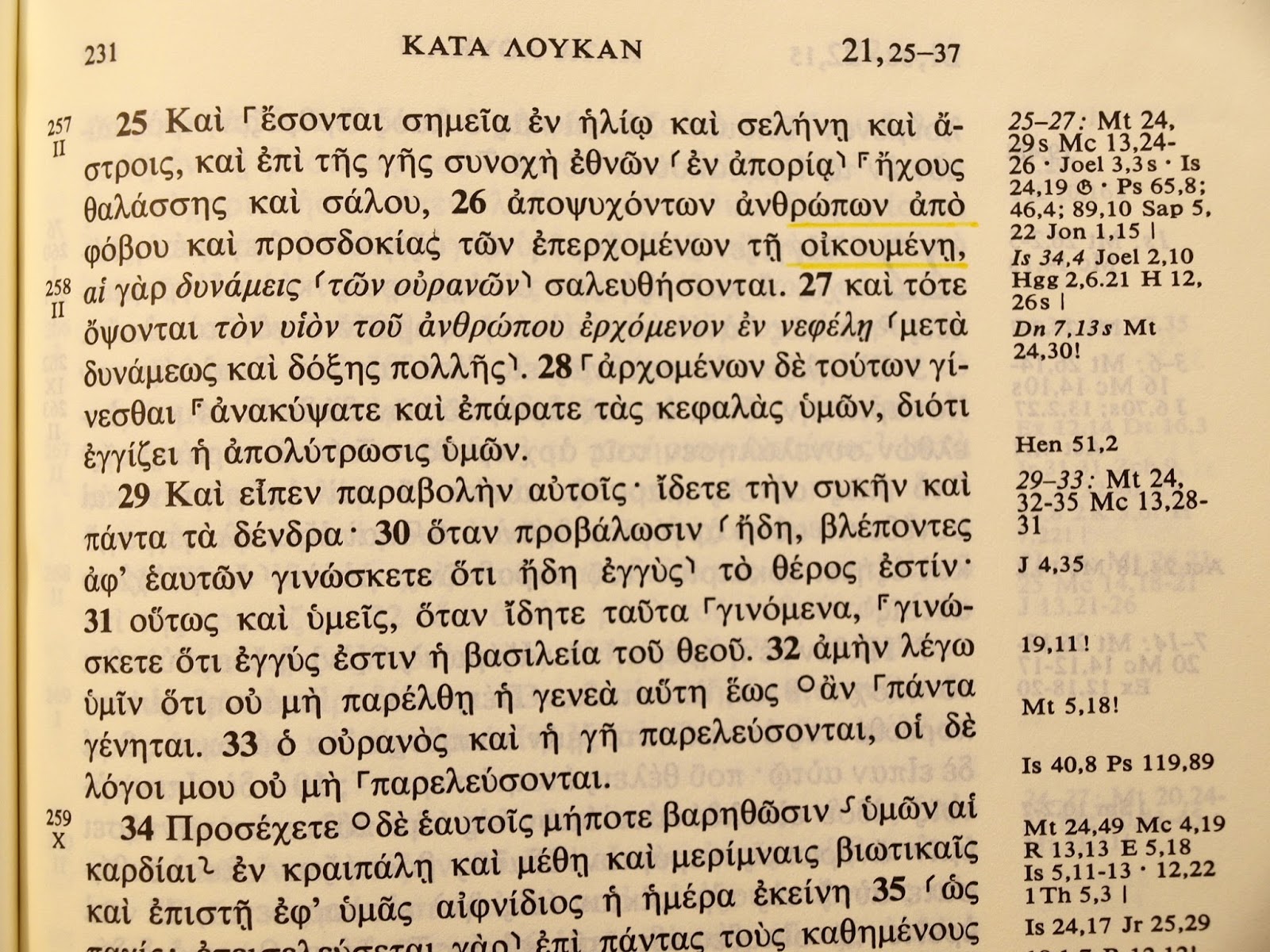
Mieleeni muistutettu tapaus korkealta vuorelta osoittautui liittyvän aiheeseen, sillä Luukkaan kertomuksessa "Perkele kiusaa Jeesusta" kyseinen sana todella esiintyy.

The picture I got of Jesus and Satan seemed to be part of this topic, for in the text of Luke I found the word I was looking for.


Luuk. 4: 5 - 8:
"Ja perkele vei hänet korkealle vuorelle ja näytti hänelle yhdessä tuokiossa kaikki MAAILMAN valtakunnat.
ja sanoi hänelle: 'Sinulle minä annan kaiken tämän valtapiirin ja sen loiston, sillä minun haltuuni SE on annettu, ja minä annan SEN, kenelle tahdon.
Jos sinä siis kumarrut minun eteeni, niin tämä kaikki on oleva sinun.'
Jeesus vastasi ja sanoi hänelle: 'Kirjoitettu on: Sinun pitää kumartaman Herraa, sinun Jumalaasi, ja häntä ainoata palveleman'."

Luke 4: 5 - 8:
"And the devil, taking him up into a high mountain, chewed unto him all the kingdoms of the WORLD in a moment of time.
And the devil said unto him, All this power will I give thee, and the glory of them: for that is delivered unto me; and to whomsoever I will I give it.
If thou therefore wilt worship me, all shall be thine.
And Jesus answered and said unto him, Get thee behind me, Satan: for it is written, Thou shalt worship the Lord thy God, and him only shalt thou serve."

* OIKOUMENE tarkoittaa asuttua maailmaa, maanpiiriä
* OIKOUMENE on Perkeleen hallinta-alue
* Jeesusta SE ei kiinnostanut vähääkään
* Vastauksessaan Perkeleelle Jeesus asettaa vastakohdan Perkeleen hallinta-alueen periaatteille;  YKSI AINOA JUMALA

* OIKOUMENE means inhabited world, circuit of the globe
* OIKOUMENE is the management area of the Devil
* Jesus was not interested of IT at all
* In his answer to the Devil Jesus gave an opposite of the principles of the management area of the Devil; ONE GOD


Toinenkin OIKOUMENE-teksti löytyy Luukkaan Evankeliumista.

Even the second OIKOUMENE-text is in the gospel of Luke.


Luuk. 21: 26:
"Ja ihmiset menehtyvät peljätessään ja odottaessaan sitä, mikä MAANPIIRIÄ kohtaa; sillä taivaitten voimat järkkyvät."

Luke 21: 26:
"Men's hearts failing them for fear, and for looking after those things which are coming on the EARTH: for the powers of heaven shall be shaken."

* Jumalan tuomio kohdistuu Perkeleen hallinta-alueeseen (OIKOUMENE)
* Ihmiset vaistoavat Jumalan tuomion olevan tulossa, ja menehtyvät pelosta odottaessaan sitä
* Mikä lienee tuomion kohde ja syy?

* God's judgment shall face the management area of the Devil (OIKOUMENE)
* people know instinctively that God's judgment is about to come and they die for fear when expecting for it
* What shall be the reason and the object of the judgment?


Myös seuraava teksti löytyi lääkäri Luukkaalta, mutta Apostolientekojen puolelta.

Even to the next text is from Luke but in the Acts.


Ap.t 17: 31:
"Sillä hän (Jumala) on säätänyt päivän, jona hän on tuomitseva MAANPIIRIN vanhurskaudessa sen MIEHEN kautta, jonka hän siihen on määrännyt; ja hän on antanut kaikille vakuuden herättämällä hänet kuolleista."

Acts. 17: 31:
" Because he hath appointed a day, in the which he will judge the world in righteousness by that MAN whom he hath ordained; whereof he hath given assurance unto all men, in that he hath raised him from the dead."

* Jumala on määrännyt tietyn päivän MAANPIIRIN (OIKOUMENE) tuomiopäiväksi
* Jumalan tuomio tapahtuu vanhurskaudessa tehtävään määrätyn MIEHEN kautta
* Jumalalta tehtävän saanut MIES tunnetaan kuoleman voittajana, sillä hän on noussut kuolleista
* Ainoa kuoleman voittanut MIES on Jeesus  Messias (1. Kor. 15: 20; 1. Tim. 2: 5)

* God had appointed a day for the judgment of the WORLD (OIKOUMENE)
* God will judge it in righteousness by the MAN he has chosen
* That MAN is know as a winner of the dead, for he has resurrected from the dead
* The only MAN who has resurrected is Jesus the Messiah (1. Cor. 15: 20; 1. Tim. 2: 5)


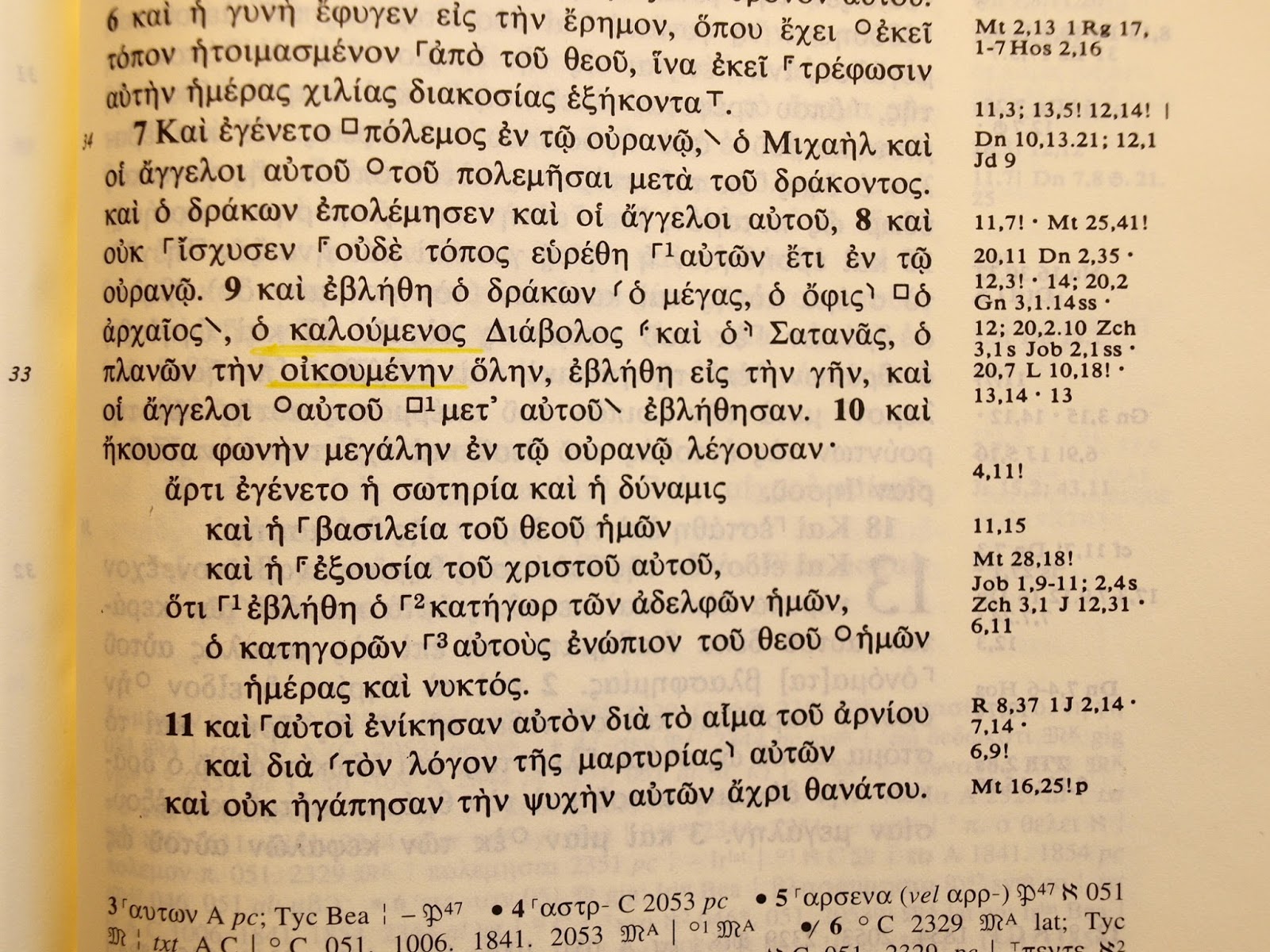
Luukkaan tekstien lisäksi sana OIKOUMENE löytyy kolme kertaa Johanneksen Ilmestyskirjasta.

Even the apostle John used the word OIKOUMENE three times in the text of Revelation.


Ilm. 3: 10:
"Koska sinä olet ottanut minun kärsivällisyyteni sanasta vaarin, niin minä myös otan sinusta vaarin ja pelastan sinut koetuksen hetkestä, joka on tuleva yli koko MAANPIIRIN koettelemaan niitä, jotka maan päällä asuvat."

Rev. 3: 10:Because thou hast kept the word of my patience, I also will keep thee from the hour of temptation, which shall come upon all the world, to try them that dwell upon the earth."

* Koetuksen hetkestä ja Jumalan tuomiosta on valmistettu pelastus
* Pelastuksen saavat ne, jotka ottavat vaarin Jumalan kärsivällisyyttä vaativasta sanasta; ne, jotka uskovat Jumalan ilmoitukseen... eikä Perkeleen väärennökseen

* There is a possibility to be saved from the hour of temptation and God's judgment
* The saved shall be those who have kept God's word of patience; those who believe in God's information/word... not on the forgery of the Devil


Ilm. 12: 9:
"Ja suuri lohikäärme, se vanha käärme, jota perkeleeksi ja saatanaksi kutsutaan, koko MAANPIIRIN villitsijä, heitettiin maan päälle, ja hänen enkelinsä heitettiin hänen kanssansa."

Rev. 12: 9:
"And the great dragon was cast out, that old serpent, called the Devil and Satan, which deceiveth the whole world: he was cast into the earth, and his angels were cast out with him."

* Tultuaan heitetyksi maan päälle, perkele katsoi saaneensa MAANPIIRIN omaan hallintaansa
* MAANPIIRIN hallitsija on VILLITSIJÄ, jonka nimi on Perkele eli Panettelija ja Saatana eli Vastustaja/Vihollinen
* MAANPIIRIN VILLITSIJÄ SOTII JUMALAA VASTAAN AINA JA KAIKKIALLA

* When the Devil was cast out on the earth he stole the management of the WORLD
* The ruler of this WORLD is an instigator, whose name is Devil or Slanderer and Satan or Opponent/Enemy


Ilm. 16: 13, 14:
"Ja minä näin lohikäärmeen suusta ja pedon suusta ja väärän profeetan suusta lähtevän kolme saastaista henkeä, sammakon muotoista.
Sillä ne ovat riivaajain henkiä, jotka tekevät ihmeitä; ne lähtevät koko MAANPIIRIN kuningasten luo kokoamaan heidät sotaan Jumalan, Kaikkivaltiaan, suurena päivänä."

Rev. 16: 13, 14:
"And I saw three unclean spirits like frogs come out of the mouth of the dragon, and out of the mouth of the beast, and out of the mouth of the false prophet.
For they are the spirits of devils, working miracles, which go forth unto the kings of the earth and of the whole WORLD, to gather them to the battle of that great day of God Almighty."

* Jeesuksen opetuksen mukaan on vain YKSI JUMALA (Joh. 17: 3), mutta kolminaisuusopin mukaan jumalia on kolme
* Jumalan sanan vastainen opetus on lähtöisin lohikäärmeestä eli Perkeleestä/Saatanasta
* Perkeleen valheoppi on levinnyt Jumalaa ja "Korkeimman pyhiä" vastaan sotivan pedon (Dan. 7: 8, 11, 20, 21, 24, 25) ja tämän langenneiden tytärten uskontoon (Ilm. 17: 5)
* Nikean kirkolliskokous eli Ensimmäinen EKUMEENINEN kirkolliskokous pidettiin Rooman keisarin, Konstantinus Suuren, johdolla vuonna 325 (Rooma = silloinen asuttu maailma)
* Nikeassa aloitettiin kolminaisuusopin kehittely, ja sitä jatkettiin Konstantinopolin ensimmäisessä kirkolliskokouksessa vuonna 381
* Konstantinopolissa täydennetty kirkkoa sitova uskontunnustus tunnetaan nimellä Nikean uskontunnustus
* Sana EKUMEENINEN  (= koko maailmaa käsittävä) johdetaan sanasta OIKOUMENE
* EKUMENIA ja KOLMINAISUUSOPPI kuuluvat saumattomasti yhteen, mutta SEN edessä Jeesus ei kumarra, sillä hän tietää, että on vain YKSI AINOA JUMALA, ISÄ

* As Jesus taught there is only ONE GOD (John 17: 3), but according to the Trinity there are three gods
* All teaching against God's word comes from the dragon or the Devil/Satan
* The false teaching/doctrine of the Devil has spread to the religion of the beast, which has been fighting against God and the saints of the most High (Dan. 7: 8, 11, 20, 21, 24, 25) and to the religion of the fallen daughters of the beast (Rev. 17: 5)
* Constantine the Great, the emperor of Rome, was the leader of the first council of Nicaea or the first ECUMENICAL council in 325 (Rome = the inhabited world in those days)
* The elaboration of theTrinity began in Nicaea, and it was completed in Constantinople in 381
* The creed completed in Constantinople is known by the name the Nicaea Creed
* the word ECUMENICAL (worldwide) is derived from the word OIKOUMENE
* ECUNEMISM and The TRINITY belongs seamlessly together, but Jesus doesn't bow before IT nor worship IT, for he knows that there is only ONE GOD, The FATHER

maanantai 10. heinäkuuta 2017

Piirtojen kertomaa * The jots are telling


Herätessäni tänä aamuna lähes auringonnousun aikaan tajusin nimen "Ehjee" aivan uudella tavalla.
Näin sen ensin numeroina ja sitten kuvina, ja lopuksi ne sulautuivat Raamatun sanomaan ja iankaikkiseen evankeliumiin.

When waking up very early this morning I realised the name "Ehyeh" in a whole new way. I saw it first in numbers, then in pictures, and finally they merged with the Bible's message and the eternal gospel.


Ehjee numeroina:
5 - 10 - 5 - 1/1000

* Sanan אהיה (Ehjee) kaikkia kolmea kirjainta käytetään hepreankielisessä Raamatussa myös järjestysnumeroina. Koska א (Alef) on heprean aakkosten ensimmäinen kirjain, jokaisen luvun ensimmäinen jae merkitään sillä. Senjälkeiset jakeet numeroidaan 2., 3. ja 4.,  mutta viides jae merkitään kirjaimella ה (He, joka on heprean aakkosten viides kirjain). Sitten jakeiden numerointia jatketaan taas 6., 7., 8. ja 9., kunnes kymmenes jae merkitään taas heprean kirjaimella י (Jod, joka on heprean aakkosten kymmenes kirjain).

* Kun sanan "alef" sijaan lausutaan sana "elef", tarkoitetaan lukua 1000.

* Ehjee-sanan numeroiden summa on 21. Kaksikymmentäyksi voidaan kirjoittaa myös muotoon 3X7 ja 777 (kolme seiskaa peräkkäin).

* Raamatun ensimmäisen jakeen (1. Moos. 1: 1) heprean sanoista "Jumala", "taivas" ja "maa" muodostuu luku 777. Siksi katsotaan, että 777 edustaa käsitettä KOKO UNIVERSUM. Siksi voidaan ajatella, että jo luomisessa Jumala katsoi kauas tulevaisuuteen, kohti ennallistettua ja uudeksi luotua maailmaa, jossa vanhurskaus asuu. Tuhannetkin vuodet ovat vain kuin silmänräpäys hänen aikataulussaan. Voitto kuolemasta ja Perkeleestä oli jo etukäteen täysin varmaa Voidellussa Jeesuksessa.


Ehyeh as numbers:
5 - 10 - 5 - 1/1000

* All those three letters of the word אהיה (Ehyeh) are used in the Hebrew Bible also as serial numbers. Because א (Alef) is the first Hebrew Alphabet it's also the sign of every first verse in every chapter. After that comes the numbers 2., 3. and 4., but the fifth verse is marked with ה (He, which is the fifth Hebrew Alphabet). Then the numbering continues again with numbers 6., 7., 8. and 9., until the tenth verse is marked with י (Yod, which is the tenth Hebrew Alphabet).

* If you read "elef" instead of "alef", it means the number 1000.

* The sum of numbers in the word Ehyeh is 21. Twenty-one is 3X7 and also 777 (three sevens). 

* 777 comes from the Hebrew words of the first verse in the Bible (Gen. 1: 1); "God", "heaven" and "earth". So it is thought that 777 means THE WHOLE UNIVERSE. Therefore we can say that already in the creation God looked far ahead of the future towards the restored and newly created world where righteousness lives. Even thousands of years are just a blink of an eye on his schedule. The victory over death and the Devil was even beforehand perfectly clear in the Atoned Jesus.


Ehjee kuvina:
א  merkitsee härkää, esikoista, johtajaa

ה merkitsee ikkunaa

י merkitsee kättä


Ehyeh as pictures:
א means ox, firstborn, leader

ה means window

י means hand


Ehjee iankaikkisena evankeliumina:
א  Ehjee-sanan ensimmäiseen kirjaimeen liittyy siis ajatus:
* Jumalasta, jonka maailmassa yksi päivä on kuin tuhat päivää ja tuhat päivää kuin yksi päivä. Ehjee näkee pitkätkin aikajaksot yhtenä kokonaisuutena, ja hän pystyy jakamaan jokaisen aikajakson pieniin yksityiskohtiin.

* härästä, puhtaasta uhrieläimestä (2. Moos. 24: 5). Härkähän oli uhrieläin aivan samoin kuin karitsa ja kyyhky. Jeesus on tuo härkä/karitsa/kyyhky, jonka täydellinen uhri palauttaa kaiken kohdalleen ikuisesti koko universumissa.

י Ehjee-sanan kolmanteen kirjaimeen liittyy ajatus:
* pienimmästä piirrosta (Jod on heprean pienin kirjain) ja lain 10 käskystä (2. Moos. 20: 2 -17;
5 Moos. 5: 6 -21), joista ei pieninkään piirto katoa täyttymättä (Matt. 5: 18).
* Jumalan pyhän lain ainoa todellinen täyttäjä on Jeesus (Joh. 19: 30), Golgatan keskimmäisellä ristillä henkensä antanut Voideltu. Ainoastaan Jeesuksen elämä on täydellistä Jumalan edessä ja hänen kättensä teot ovat vanhurskaat, Jumalan mielenmukaiset.

ה Ehjee-sanan toiseen ja neljänteen kirjaimeen liittyy ajatus:

* kahdesta ikkunasta, joista avautuu näky kahdesta joukosta, joissa kummassakin on viisi neitsyttä; Raamatun mukaan toisen ryhmän edustajat olivat "viisaista" ja toisen "tyhmiä" (Matt. 25: 1 - 13). Nämä kaksi ryhmää edustavat kaikkia ihmisiä kaikkina aikoina. Heille kaikille on tarjottu mahdollisuutta osallistua Karitsan hääaterialle.
* viisaiden ryhmä ymmärtää alamittaisuutensa Jumalan lain edessä ja turvautuu Uhrihärän/Yljän ansioihin, ja siksi heidän lyhdyssään riittää öljy ja loistaa valo (Joh. 1: 4).
* tyhmät pitävät omia tekojaan Uhrihärän sijaisuutta parempina ja torjuvat Yljän lahjan; he eivät suostu nöyrtymään eivätkä luopumaan omista ansioistaan ja polkevat jalkoihinsa Jumalan pyhän lain, joka voisi olla heidän valonsa (Ps. 119: 105). Siksi heidän lampuissaan ei ole öljyä, ja he vaeltavat pimeydessä (Joh. 1: 5).


Ehyeh as the eternal gospel:
א The first letter of the word Ehyeh is telling us:
* about God and his world, where one day is like a thousand years and a thousand years is like one day. Ehyeh can see even very long periods as a whole, and he is able to share every long period of time into small details.
* about an ox, a pure sacrificial animal (Ex. 24: 5). Even an ox was a sacrificial animal like a lamb and a dove, too. Jesus is the ox/lamb/dove, whose perfect victim makes everything new forever in the whole universe.

י The third letter of the word Ehyeh is telling us:
* about the smallest jot (Yod is the smallest Hebrew Alphabet) and the ten commandments (Ex. 20: 2 - 17; Deut. 5: 6 - 21), which never loose a smallest jot "till all be fulfilled" (Matthew 5: 18).
* about Jesus, who is the only one who is able to fulfill God's law (John 19: 30), he is the Anointed who was crucified on the middle cross of the Golgotha. Only his life is perfect and his deeds/actions are righteous before God... they gratify God.

ה The second the the forth letters of the word Ehyeh are telling us:
* thought two windows about two croups of people; both of five virgins. As the Bible tells the five virgins were "wise" and the others "foolish" (Matthew 25: 1 - 13). These two croups represent all people at all times. All of them have been offered an opportunity for the Lamb's Wedding.
* the wise understand how subtle they are before God's law and they resort to the merit of Jesus, their sacrificial ox/bridegroom, and therefore there will be oil enough in their lamps and they have light (John 1: 4).
* the foolish prefer their own actions to the substitutionary sacrifice of Jesus and therefore they reject the gift of the bridegroom; they refuse to humble themselves and give up their own merits and they strike God's holy law, which could be their light (Ps. 119: 105). Therefore there is no oil in their lamps and they are walking in the darkness (John. 1: 4).


Loppupäätelmä ja yhteenveto:
* Sanassa יהוה (ns. tetragrammi -> Jahve/Jehova) on samoja kirjaimia kuin sanassa אהיה (Ehjee), mutta siitä puuttuu uhrihärkää edustava א (Alef). Tetragrammin kolmantena kirjaimena on "naulaa" merkitsevä ו (Vau). Ne, jotka luottavat omiin hyviin tekoihinsa julistavat, että Jeesus muka naulitsi Jumalan lain ristiin, eivätkä käskyt... varsinkaan sen neljäs käsky... ole enää voimassa. Kuitenkin Raamatun opetuksen mukaan yhden käskyn rikkominen merkitsee koko lain rikkomista (5. Moos. 27: 26; Matt. 5: 19; Gal. 3: 10; Jaak. 2: 10).
* Siinä missä Ehjee-sanan numerot viittaavat kaikkeuteen ja Jumalan täydelliseen suunnitelmaan jo luomisaamuna, tetragrammin numerot pyörivät kuutosen ympärillä, sillä Vau on heprean aakkosten kuudes (6.) kirjain.
* Lisäksi (6) kuusi tarkoittaa ihmisen lukua, sillä ihminen luotiin kuudentena päivänä.
* Tetragrammin kaikkien kirjainten summa on 26, joka voidaan muuntaa myös muotoihin 66 (kaksi kuutosta) tai 6X6, joka on 36.
* 36 puolestaan on liittyy Sigilla Solikseen eli Aurinkonsinettiin, jossa kaikkien 1:stä 36:een olevien lukujen summa on 666.
* Niinikään ihmisen aikakäsitys on 6:lla jaollinen (minuutti = 60 sek, tunti = 60 min, vuosi = 2X6 kuukautta).
* Kuusi on myös Saturnuksen tunnus, sillä Saturnus on 6. planeetta.
* Okkultistisessa/kabbalistisessa Elämänpuussa Binah (3. sefira) on nimetty sekä tetragrammilla että Saturnuksella.
* Saturnuksen symbolina antiikin ajoista lähtien on ollut kuusisakarainen tähti eli heksagrammi (lieneekö johdos seksagrammista... seksa = kuusi, heksa = noita, noituus), jonka geometriasta lasketaan luku 666.
* Kun sana EHJEE kattaa koko kaikkeuden ja julistaa Jeesuksen täydellistä kuuliaisuutta ja Isän suurta armoa ja pitkämielisyyttä koko ihmiskuntaa (sekä viisaat että tyhmät neitsyet) kohtaan, tetragrammi pyörii pelkästään ihmisen navan ympärillä ja edustaa ihmisen omia riittämättömiä tekoja oikeuttaen Jumalan tahdon vastaisen elämänmallin ja Jumalan Pojan tappamisen.


Finally the summary:
* The word יהוה (so called Tetragrammaton -> Yahweh/Jehovah) has same letters as the word אהיה (Ehyeh), but it is missing א, which represents the sacrificial ox. The third letter of the Tetragrammaton is ו (Waw) meaning "nail". Those who rely on their own actions are proclaiming that Jesus supposedly nailed God's law on the cross and the commandments... especially the forth commandment... are no longer valid. However the Bible teaches us that to break one commandment means to break all of them (Deut. 27: 26; Matthew 5: 19; James 2: 10)
* The numbers of the word Ehyeh refer to the universe and God's perfect plan and mission even from the creation, but the numbers of the Tetragrammaton are whirling around 6 (six), for Waw is the sixth Hebrew Alphabet.
* Six is also the number of man, for man was created on the sixth day.
* The sum of all letters of the Tetragrammaton is 26, which may also be written in the form of 66 (two sixs) or 6X6, which is 36.
* But 36 is joined to the Sigilla Solis and 666, which is the sum of the numbers from 1 to 36.
* Even our time is divisible by six (a minute = 60 seconds, an hour = 60 minutes, and a year = 2X6 months).
* Six is also the symbol of Saturn, for it's the sixth planet.
* Binah, the third sefira on the occult Sefirot has been signed by the Tetragrammaton and Saturn.
* From the ancient times the hexagram (six-pointed star) has been the symbol of Saturn, and 666 has been counted from it's geometry .
* The word EHYEH refers to the universe and represents the perfect obedience of Jesus and proves the great grace and patience of the Father towards the mankind (both the wise and the foolish virgins), but the Tetragrammaton is whirling just around human belly/button and it represents only human subtle actions justifying the protest against God and the murder of his Son.


lauantai 10. kesäkuuta 2017

Isän ojennetut kädet* Father's extended hands

Kuten olen jo moneen kertaan tainnut mainita Joh. 17: 3 on minulle tärkein Raamatun jae, jonka perusteella uskon, että on vain yksi Jumala, ISÄ. Koen tuon tekstin Jeesuksen omaksi uskontunnustukseksi. Jeesuksen sanojen mukaan on vain yksi ainoa Jumala, Isä, joka on lähettänyt hänet.

Perhaps I have already mentioned many times that John 17: 3 is the most important Bible text for me, on which I believe that there is only one God, the FATHER. I think that this verse is Jesus´own confession. According to Jesus' words there is only one God, the Father, who has sent him.

Jeesus ei kutsu itseään Jumalaksi, eikä hän myöskään mainitse mitään Pyhän Hengen jumaluudesta/jumalallisesta persoonasta. Jeesuksen uskoon (vrt. Ilm. 14: 12) sisältyy siis vain yksi ainoa Jumala, Isä.

Jesus doesn't call himself God, nor does ne mention anything about the divinity/divine person of the Holy Spirit. Thus there is only one God in the faith of Jesus (compare Rev. 14: 12), and that is the Father.

Tässä jakeessa Jeesus sanoo Isän lähettäneen hänet. Tämän saman seikan Jeesus on sanonut ainakin 34 kertaa Johanneksen evankeliumissa. Jokainen voi itse tarkistaa asian Johanneksen tekstistä:
3: 17
5: 23, 24, 30, 36, 37, 38
6: 29, 38, 44, 57
7: 16, 29, 33
8: 16, 18, 26, 29, 42
9: 4
10: 36
11: 42
12: 44, 45, 49
14: 24
15: 21
16: 5
17: 3, 8, 18, 21, 23, 25

In this verse Jesus says that God had sent him. Jesus has said the same thing at least 34 times in the gospel of John. You can check them in the texts of John:
3: 17
5: 23, 24, 30, 36, 37, 38
6: 29, 38, 44, 57
7: 16, 29, 33
8: 16, 18, 26, 29, 42
9: 4
10: 36
11: 42
12: 44, 45, 49
14: 24
15: 21
16: 5
17: 3, 8, 18, 21, 23, 25


Kaikissa näissä 34 jakeessa esiintyy heprean verbi שלח (shalach), joka merkitsee
1. päästää vapaaksi/irti
2. ojentaa käsi
3. päästää menemään
4. lähettää

In all these 34 verse there is a Hebrew verb שלח (shalach), which means
1. set free
2. stretch out the hand
3. let go
4. send

Minusta on sangen mielenkiintoista, miten tämä sama verbi esiintyy myös Vanhan Testamentin vedenpaisumus-kertomuksessa (1. Moos. 8. luku). Nooa lähetti kaarneen/korpin tiedustelulennolle, ja hän päästi kolme eri kyyhkystä menemään ja tutkimaan vesien laskemista. Kun ensimmäinen kyyhkynen ei löytänyt lepopaikkaa arkin ulkopuolelta, Nooa ojensi kätensä ja otti sen takaisin arkkiin. Samaa verbiä שלח  (shalach) käytetään siis sekä lähettämisen että vastaanottamisen yhteydessä. Sekä lähettäminen että vastaanottaminen tapahtuu käden/käsien avulla.

I find it very interesting that the same verb is present also in the story of the Flood in the Old Testament (Gen. 8th). Noah sent a raven to find out the depth of the waters, and he let three doves to go and find some trees. When the first dove didn't find any place for rest outside the ark, Noah stretched out his hand and took it back into the ark. The same verb שלח (shalach) has been used both with sending and receiving. Both are done with hands.

Jumala on Henki (Joh. 4: 24), emmekä voi varmuudella tietää, onko hänellä fyysistä muotoa tai konkreettisia käsiä. Kuitenkin heprean verbin merkitykset puhuvat minulle äärimmäisen kauniisti Isän rakkaudesta meitä kohtaan. Isä ojensi kätensä meitä kohtaan Jeesuksessa ja päästi Poikansa (vrt. Joh. 1: 1, 14) menemään ja toteuttamaan laatimansa pelastussuunnitelman. Jeesuksen täydellinen onnistuminen tuossa tehtävässä merkitsee meidän syntisten pääsemistä vapaaksi/irti synnin kahleista. Ylistys ja kunnia yhdelle ja ainoalle Jumalalle, meitä rakastavalle Isälle! Hänen kätensä ovat jo vastaanottaneet voittosaatossa ylös nousseen Jeesuksen, ja hänen kätensä ovat avoimina vastaanottamaan kaikki, jotka asettuvat Karitsan puolelle tässä viimeisessä taistelussa.

God is a spirit (John4: 24), and we can not possibly know if he has a physical shape or concrete hands. However the meanings of the Hebrew verb are describing me very beautifully the Father's love for us. The Father stretched out his hands in Jesus and let his Son (compare John 1: 1, 14) go and fulfil his plan of salvation. The perfect succession of Jesus in this task means that we are set free from the chains of sin. Praise and honour to the only God, the Father, who loves us! His hands have already received Jesus when he raised up in the triumph, and his hands are still open to receive all, who shall stand on the side of the Lamb.

lauantai 3. kesäkuuta 2017

Tiesitkö tämän * Did you know this

Vuonna 1548 ilmestyi Mikael Agricolan (1510 - 1557) tekemä Uuden Testamentin suomennos nimellä Se Wsi Testamenti. Agricola käytti apunaan kreikankielistä tekstiä ja Martti Lutherin tekemää saksannosta.

The first Finnish New Testament (Se Wsi Testamenti) was published in 1548 translated by Mikael agricola (1510 - 1557). Agricola used the Greek text and Luther's translation in German.

Noin sata vuotta myöhemmin vuonna 1642 ilmestyi puolestaan ensimmäinen suomenkielinen koko Raamattu nimellä BIBLIA. Kaarle-herttua (1550 - 1611) oli pannut alulle suomenkielisen Raamatun käännöstyön jo vuonna 1602. Käännöskomitea kuitenkin vaihtui erinäisten vastoinkäymisten takia, mutta lopulta käännöskomiteaa johti Turun piispa Isaacus Rothovius (1572 - 1652). Komiteaan kuuluivat hänen lisäkseen myös Turun kirkkoherra Eskil Petraeus (1593 - 1657), Piikkiön kirkkoherra Gregorius Favorinus (1500-luvun loppu - 1660), Maskun rovasti Henrik Hoffman (1599 - 1666) ja Turun Akatemian pyhien kielten professori Martinus Stodius (1590 - 1675). Komitean saamissa ohjeissa vaadittiin puhdasta, kaikkialla maassa ymmärrettävää suomea sekä alkukielen mukaista käännöstä, jonka tuli kuitenkin vastata Martti Lutherin (1483 - 1546) tekemän saksannoksen tulkintoja. Ilmeisesti komitea keskittyi lähinnä Vanhan Testamentin kääntämiseen ja käytti hyväkseen Agricolan tekemää suomennosta Uudesta Testamentista.

About a hundred years later in 1642 the first Finnish Bible (BIBLIA) appeared. Already in 1602 Charles the Duke (1550 - 1611) had made a start to the translation, but for many adversities the committee was changed. Finally Isaacus Tothovius (1572 - 1652), the bishop of Turku, took the leadership. Other committee members were Eskil Petraeus (1593 - 1657), the vicar of Turku, Gregorius Favorius (the end of the 16th century - 1660), the vicar of Piikkiö, Henrik Hoffman (1599 - 1666), the the dean of Maksu and Martinus Stodius (1590 - 1675), the professor of the holy languages in Turku Academy. The committee's instructions required pure Finnish (ably to be understand in the whole country) and an exact original translation, which corresponds however to Martin Luther's (1483 - 1546) translation in German. Apparently the committee focused on the Old Testament, for they had already the New Testament made by Agricola.

Johanneksen evankeliumin ensimmäinen jae näyttää BIBLIASSA tältä (klikkaa kuvat suuremmiksi):

The first verse in the gospel of John in BIBLIA looks like this (click the pictures):
(... and God was the Word)


Bibliasta tehtiin ajanmukaiset versiot 1683/85 ja 1776. 
Vuoden 1776 versiossa Joh. 1: 1 näyttää tältä.

The modern versions of BIBLIA were made in 1683/85 and 1776.
In the version of 1776 John 1: 1 looks like this:
(... and God was the Word)


Martti Luther käänsi Uuden Testamentin 11 viikossa Wartburgin linnassa 1522.  Vanhan Testamentin kääntämiseen häneltä kului kuitenkin 12 vuotta, vaikka hänellä oli siinä apunaan työryhmä. Ensimmäinen saksankielinen versio ilmestyi 1534. Lutherin käännöksestä myöhemmin tehdyssä versiossa (GerLut 1545) Joh. 1: 1 menee edelleenkin näin:

Martin Luther translated the New Testament in 11 weeks in the castle of Wartburg in 1522. But it took about 12 years to translate the Old Testament, although he had a team. The first German version was published 1534. In a later version of Luther (GerLut 1545) John 1: 1 goes still like this:
(... and God was the Word)


Luther teki saksannoksen kreikasta, mutta hepreaksi, joka on lähempänä apostoli Johanneksen omaa äidinkieltä, arameaa, kysyinen jae menee vielä tänäänkin näin:

Luther made his translation from Greek, but in Hebrew, which is nearer to Aramaic, the native language of the apostle John, the first verse in John's gospel goes even today like this:


ALUSSA OLI (SE) SANA JA (SE) SANA OLI (SEN) JUMALAN TYKÖNÄ JA JUMALA OLI (SE) SANA.

IN THE BEGINNING WAS (THE) WORD AND (THE) WORD WAS WITH (THE) GOD AND GOD WAS (THE) WORD.